
Your thoughts slip before you can catch them, and by midday, the mental clarity you once took for granted has gone quiet. You re-read the same paragraph, then stand in the kitchen wondering why you walked in. At night, a low hum of anxiety keeps you from settling, and your mood shifts in ways you can’t explain.
And your labs? Mostly normal.
Many people searching for why “lithium orotate changed my life” are discovering that these subtle shifts often signal a need for trace mineral support. By utilizing lithium orotate supplements, you are providing your nervous system with lithium as orotate, a form designed for high bioavailability and brain penetration.
Prescription Lithium vs. Lithium Orotate: Understanding the Difference
Most people hear “lithium” and picture the high-dose drug used to treat bipolar disorder. That version, typically lithium carbonate, requires regular blood monitoring and carries serious risks at high doses (1). What we’re talking about here is a different thing entirely.
| Feature | Prescription Lithium Carbonate | Low-Dose Lithium Orotate |
|---|---|---|
| Primary purpose | Treat bipolar disorder | Trace mineral replenishment |
| Typical daily dose | 600-1,800 mg | 1-10 mg |
| Requires blood monitoring | Yes (narrow safety window) | No |
| Available over-the-counter | No | Yes |
| Primary target systems | Mood stabilization (psychiatric) | Brain, mood, longevity, bone, metabolism |
Lithium orotate is a trace mineral supplement taken at doses far smaller than prescription lithium. Research suggests it may actually be an essential trace nutrient, meaning one the body needs in small amounts to work properly (2). Iodine deficiency impairs thyroid function. Low lithium intake may do the same to the brain, undermining mood regulation, nerve cell health, and long-term mental sharpness.
That gap matters a lot for how you read the research. Taking 5 to 10 mg of lithium orotate works very differently in the body from taking 900 mg of lithium carbonate (3).
What Lithium Actually Does Inside the Body
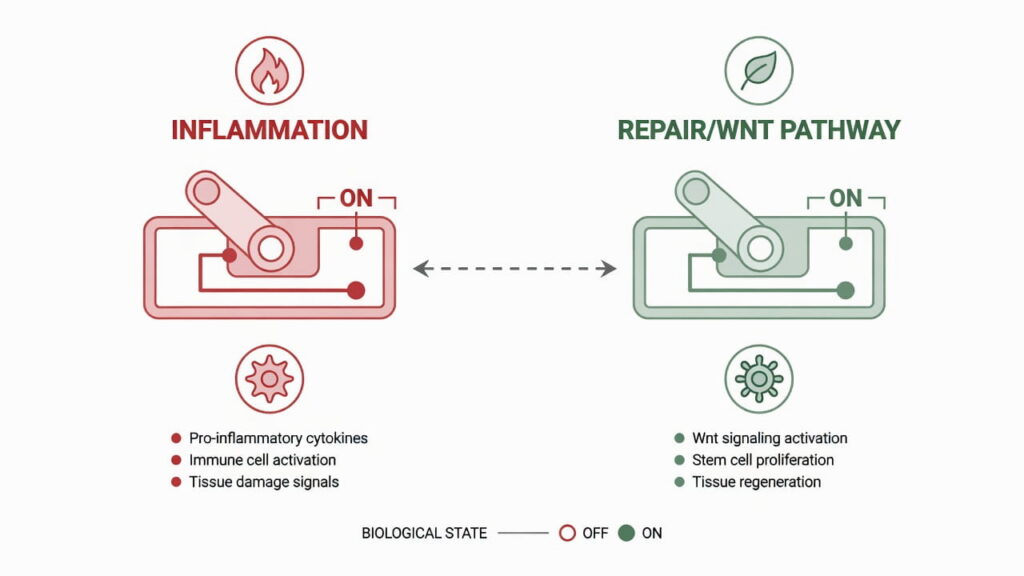
To understand why low-dose lithium has such wide-ranging effects, you need to know about one key enzyme: GSK3β (glycogen synthase kinase 3-beta). It acts like an on/off switch for inflammation and tissue breakdown. When it stays on too long, it triggers inflammation, accelerates brain cell damage, and disrupts blood sugar control (4).
Aging, poor metabolic health, and chronic stress all leave this switch stuck in the “on” position. Think of it as a stuck accelerator on a system that should cycle between building and breaking down tissue.
Lithium’s primary job is to press the brake on GSK3β (5). That single action also triggers the Wnt/β-catenin pathway, the body’s built-in repair signal for bone, muscle, and cell renewal (6). One break point affects the entire body.
In the brain, lithium raises BDNF (brain-derived neurotrophic factor), a protein that acts like fertilizer for neurons (7). It helps them survive, adapt, and form new connections (8). It also shifts brain chemistry toward calm by raising GABA and serotonin and reducing overexcitation from excess glutamate and dopamine (9).
For a nervous system that’s been running hot, that shift is what “the static finally clearing” feels like.
It Reaches the Brain Even at Microdoses
A key question has long divided researchers: does a 5-10 mg supplement dose actually reach the brain? A human study using a specialized MRI scan (called 7Li-MRI) answered that directly. Even at a modest 5 mg daily, a dose often found in basic health supplements, lithium consistently crossed the blood-brain barrier within just 28 days, proving that pharmaceutical-level doses are not required to achieve therapeutic penetration into brain tissue (10).
Think of orotate as a molecular taxi. Lithium on its own struggles to pass through cell membranes. The orotate molecule binds to it, driving it across the blood-brain barrier more efficiently than other supplement forms (11).
That’s exactly why the brain imaging study chose lithium orotate over ionic lithium or the carbonates used in prescription drugs.
The Research-Backed Benefits
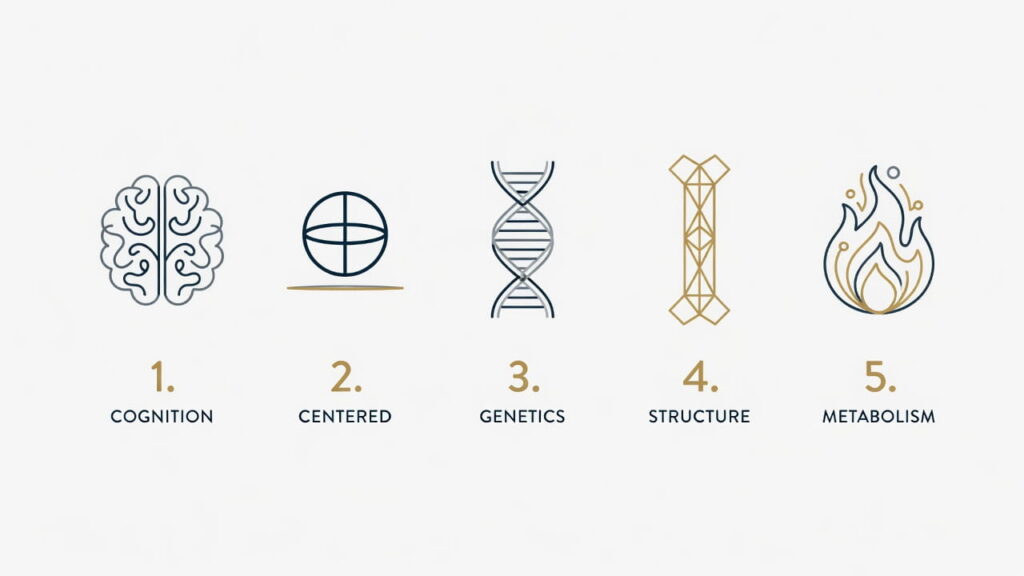
| Benefit Area | Primary Mechanism | Key Research Finding |
|---|---|---|
| Brain health and Alzheimer’s prevention | Reduces amyloid-beta plaques, suppresses protein tangles, and raises BDNF | Areas with trace lithium in drinking water show much lower rates of dementia and Alzheimer’s disease |
| Mood stability and anxiety relief | Raises GABA and serotonin; moderates dopamine-driven reactivity | Anxiety relief was the most commonly reported benefit in a global user survey; mood improvements rated highest in overall magnitude |
| Longevity and inflammaging | Blocks NF-κB inflammation switch; activates antioxidant defenses | Prescription lithium users had a 3.64-times lower chance of dying at any given age (UK Biobank, 500,000+ people) |
| Bone density and muscle function | Activates Wnt repair signal; shifts OPG/RANKL balance toward bone-building | Low-dose lithium fully restored bone mineral density in postmenopausal animal models and improved muscle force and fatigue resistance |
| Metabolic health and body composition | Insulin-mimetic properties: activate calorie-burning brown fat | Increased daily energy use and improved blood sugar control in animal models |
Cognitive Protection and Alzheimer’s Prevention
Look at water data across many countries, and a clear pattern emerges: more trace lithium in the supply, much lower rates of dementia, Alzheimer’s disease, and age-related mental decline (12).
The benefits work in several ways at once. Lithium reduces the buildup of amyloid-beta (Aβ) plaques, the sticky protein deposits that accumulate in Alzheimer’s brains (13). It also suppresses neurofibrillary tangles (twisted protein threads that disrupt brain cell communication) and increases BDNF levels (14).
In mouse models of Alzheimer’s disease, very low doses of lithium reversed memory loss, improved spatial learning, and restored cognitive function (15). In diet-related Alzheimer’s animal models, it also reduced overactive GSK3β in the brain’s decision-making center (the prefrontal cortex) within just six weeks (16).
In humans, the LATTICE pilot trial tested low-dose lithium in older adults with Mild Cognitive Impairment over two years. The primary results fell short of preset goals. People taking lithium experienced a roughly 49% slower rate of verbal memory decline per year compared to the placebo group (17). Further analysis suggested the effect may be even larger in people who already have amyloid buildup.
Mood Stability and Anxiety Relief
A global survey of people taking over-the-counter lithium found that anxiety relief was the most common reason for starting (18). It also ranked among the top reported outcomes (19). Cognition, anxiety, and mood all showed the greatest self-reported gains.
When lithium raises calming GABA signals and moderates dopamine-driven reactivity, it dials down emotional overreactivity without dulling genuine feeling. The hair-trigger stress response, racing thoughts at night, the mood shift you didn’t see coming: all signs of a nervous system stuck in overdrive. Lithium addresses them at the chemical level. For a deeper look at how the gut drives these same neurotransmitter pathways, see Psychobiotics: Mood Probiotics for Anxiety, Depression & Stress.
Survey users rated overall mood improvement as the benefit with the greatest impact, even more than cognitive gains (20). For people with low-grade anxiety or mood swings that labs can’t explain, those reports are worth weighing alongside the science.
Longevity and the Inflammaging Problem
There’s a specific biological process driving most age-related diseases, and it has a name. Inflammaging is chronic, low-grade inflammation (21). It isn’t caused by an infection. Instead, it builds up silently over decades, wearing down tissues, immune function, and brain health (22).
Think of it as a slow burn through every system at once. It’s not hot enough to trigger an obvious immune response, but it’s persistent enough to accelerate decline over a lifetime.
Lithium tackles inflammaging at the source by blocking NF-κB, a master switch that controls dozens of pro-inflammatory genes (23). At the same time, it triggers the body’s own antioxidant defenses (24). The result is a meaningful drop in background inflammation, the kind that quietly ages tissue long before symptoms appear.
The UK Biobank study (over 500,000 people) found a striking pattern: patients on prescription lithium had a significantly lower mortality rate compared to those on other psychiatric drugs (25). Trace lithium in drinking water also links to lower rates of heart disease deaths and suicide across entire regions (26).
Bone Density and Muscle Function
The same GSK3β-Blocking and Wnt repair signaling that protects the brain also acts on bone and muscle. Lithium shifts the balance between bone-building and bone-breakdown so that bone-building wins. This works through a protein ratio called osteoprotegerin (OPG) to RANKL (27).
In animal models of postmenopausal bone loss, low-dose lithium fully restored bone density to healthy control levels (28). That’s full structural recovery in a model built to study significant postmenopausal bone loss.
Muscle function improved through the same mechanisms (29). Lithium increased raw muscle force output and improved fatigue resistance in both slow-twitch and fast-twitch fibers (30). The key drivers were improved calcium handling and reduced oxidative stress (31), both tied to muscle loss (sarcopenia) that accelerates in midlife.
Metabolic Health and Body Composition
Lithium’s metabolic benefits come from what researchers call its “insulin-mimetic” properties. Think of insulin as a key and your cells’ receptors as locks. Lithium can unlock some of the same locks, triggering metabolic responses that regulate blood sugar and fat storage without insulin (32). Low-dose lithium improved blood sugar control and insulin sensitivity in dietary obesity models and postmenopausal animal studies (33).
In male rat models, low-dose lithium increased daily calorie burn and limited diet-induced weight gain (34). It did this by triggering heat production in brown adipose tissue (BAT), which generates heat rather than stores calories (35). This activated fat-burning proteins and mitochondria in brown fat, raising the body’s calorie-burning baseline.
One nuance worth noting: the calorie-burning boost appeared in male but not female rats (36). This suggests the benefit may be tied to sex hormones, with different effects before and after menopause (37). The blood sugar benefits were also positive in female models, making those findings more broadly applicable.
Dosage: What the Research and Real-World Users Show
| Form | Elemental Lithium | Best For |
|---|---|---|
| Pure Encapsulations Lithium Orotate 1 mg | 1 mg per capsule | Starting conservatively, dietary trace-level replenishment, sensitive individuals |
| Pure Encapsulations Lithium Orotate 5 mg | 5 mg per capsule | Matches the dose confirmed to reach the brain in human imaging research; most common starting point for general supplement use |
| Clinical research range | 1-15 mg daily | Range used across published human and animal studies; well below psychiatric prescribing levels |
| Prescription lithium carbonate (for reference only) | 90-270 mg elemental lithium daily | Bipolar disorder treatment requires medical supervision and regular blood monitoring |
In a global survey, three supplement forms dominated: lithium aspartate, ionic lithium, and lithium orotate (38). The most common daily dose was 10 mg, with a range of 0.3 mg to 60 mg (39). Brain imaging showed that even 5 mg over 28 days produces detectable brain levels (40). The low end of that range is still active.
Clinical research has used doses from under 1 mg (the dietary trace level) up to 15 mg daily. All of these fall far below the high doses prescribed for bipolar disorder. Blood lithium levels can be tested to confirm absorption and retention, making it straightforward for doctors to track (41).
Why the Orotate Form Matters
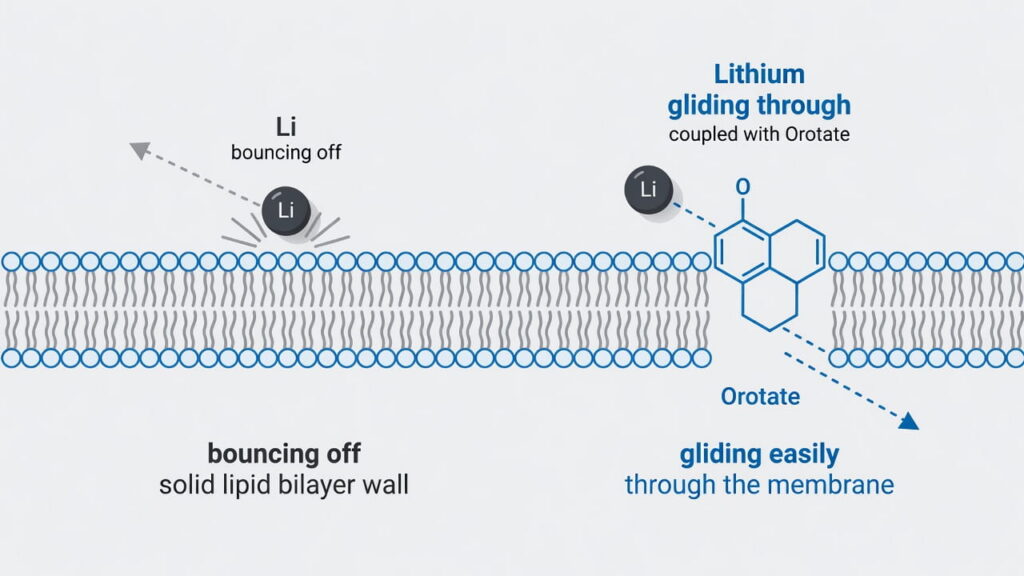
Not all lithium supplements are absorbed in the same way. The orotate molecule binds to lithium, allowing it to cross cell membranes, including the blood-brain barrier, more easily than other forms (42). That includes ionic lithium and the carbonates used in prescription drugs. It’s exactly why the brain imaging study chose lithium orotate.
The key is finding a product that lists the elemental lithium yield per capsule, which is the actual amount your body receives. The compound’s total weight runs higher because it includes the carrier molecule. Pure Encapsulations Lithium Orotate is available in two options: the 5 mg lithium orotate capsule matches the brain imaging dose, and the 1 mg lithium capsule suits a more conservative start or long-term maintenance.
Lithium Orotate Benefits, Side Effects, and Safety
Here’s what the most rigorous animal safety study found from 28 days of repeated dosing: no DNA damage or genetic harm at any dose (43). Researchers established a “no observed adverse effect level” (NOAEL) of 400 mg/kg/day (44). For a 75 kg adult, that safety ceiling is roughly 2,000 times the standard 10 mg supplement dose (45).
That threshold sits so far above any real supplement dose that the safety margin at 5 to 10 mg daily is effectively in a different league. Decades of supplement use support this, with no meaningful safety signals reported.
One case report involved a deliberate, acute overdose of 2,160 mg, equivalent to over 200 times the standard daily dose, which resulted in nausea, vomiting, and tremors (46). This extreme outlier highlights that toxicity is practically non-existent at responsible, supplement-level doses.
A global user survey highlighted a key point: side effects such as headaches, shakiness, and dizziness were more common at low doses than expected (47). Symptoms that appeared when people stopped taking it were also more frequent than anticipated (48). Start conservatively, increase slowly, and pause if anything feels off. Talk to your doctor first if you take drugs that affect kidney function, potassium levels, or mood.
Thyroid Considerations
If you have Hashimoto’s thyroiditis or any autoimmune thyroid condition, talk with your doctor before starting. High-dose lithium can suppress thyroid hormone production by blocking iodine uptake, a well-documented effect at prescription doses. Low doses are far less likely to cause this, but anyone with thyroid dysfunction or low free T3 levels should still track TSH and free T3 for the first 60 to 90 days.
A Note on Long-Term Use
High-dose lithium therapy carries risks that don’t apply at trace supplement levels, including effects on kidney function and low potassium (hypokalemia) (49). Research suggests taking extra potassium may help guard against some of these risks, though this applies mainly to prescription use (50). Periodic kidney function testing remains a reasonable step in any long-term protocol.
Frequently Asked Questions
Is lithium orotate available over the counter?
Yes, lithium orotate is available over the counter as a dietary supplement, unlike high-dose prescription lithium carbonate, which requires medical supervision.
Does lithium orotate help with sleep and ADHD?
The Bigger Picture: A Missing Micronutrient
Modern farming, water treatment, and depleted soils have wiped out the background lithium our ancestors got from food and water (51). Lower dementia rates, lower suicide rates, and lower death rates all appear in regions with naturally lithium-rich water (52).
When you think of lithium orotate as trace mineral replenishment rather than a supplement or mood drug, the risk-benefit question shifts. Most of the research above measures what happens when the body gets back something that modern life quietly took away. That lens changes how you read both the benefits and the caveats.
Low-dose lithium orotate is less about “treating” a condition and more about reclaiming a lost micronutrient. If this resonates with you, consider sharing this guide with a friend or colleague who could benefit.
Related Articles
- Creatine for Brain Fog: Why Your Brain Needs It More Than Your Muscles: explores how creatine fuels ATP production in the brain, supports mood neurotransmitters, and complements trace mineral strategies for clearing mental fatigue.
- The Gut-Thyroid-Mitochondria Connection: How to Repair Your Gut Lining and Restore Your Energy: breaks down how gut dysfunction drives thyroid suppression and mitochondrial decline, with practical steps for rebuilding energy from the inside out.
- Bacopa Benefits for Stress and Brain Function: covers how Bacopa monnieri supports cortisol regulation, BDNF-adjacent pathways, memory consolidation, and mood in six placebo-controlled human trials.
- New Study: Nicotinamide Riboside Benefits for Muscle and Mitochondria Energy: details how NR supplementation raised NAD+ levels by 230% in a twin study and increased muscle mitochondrial density, adding to lithium orotate’s longevity stack potential.
- Maximizing Nutrients for Healthy Brain Function: A Focus on ADHD in Adults and Children: outlines the key micronutrients, including magnesium, zinc, B-vitamins, and essential fats, that support focus, attention, and cognitive function in both adults and children.