A new class of psychobiotics refers to mood probiotics that may support mood and occasional feelings of anxiety, depression, and stress.
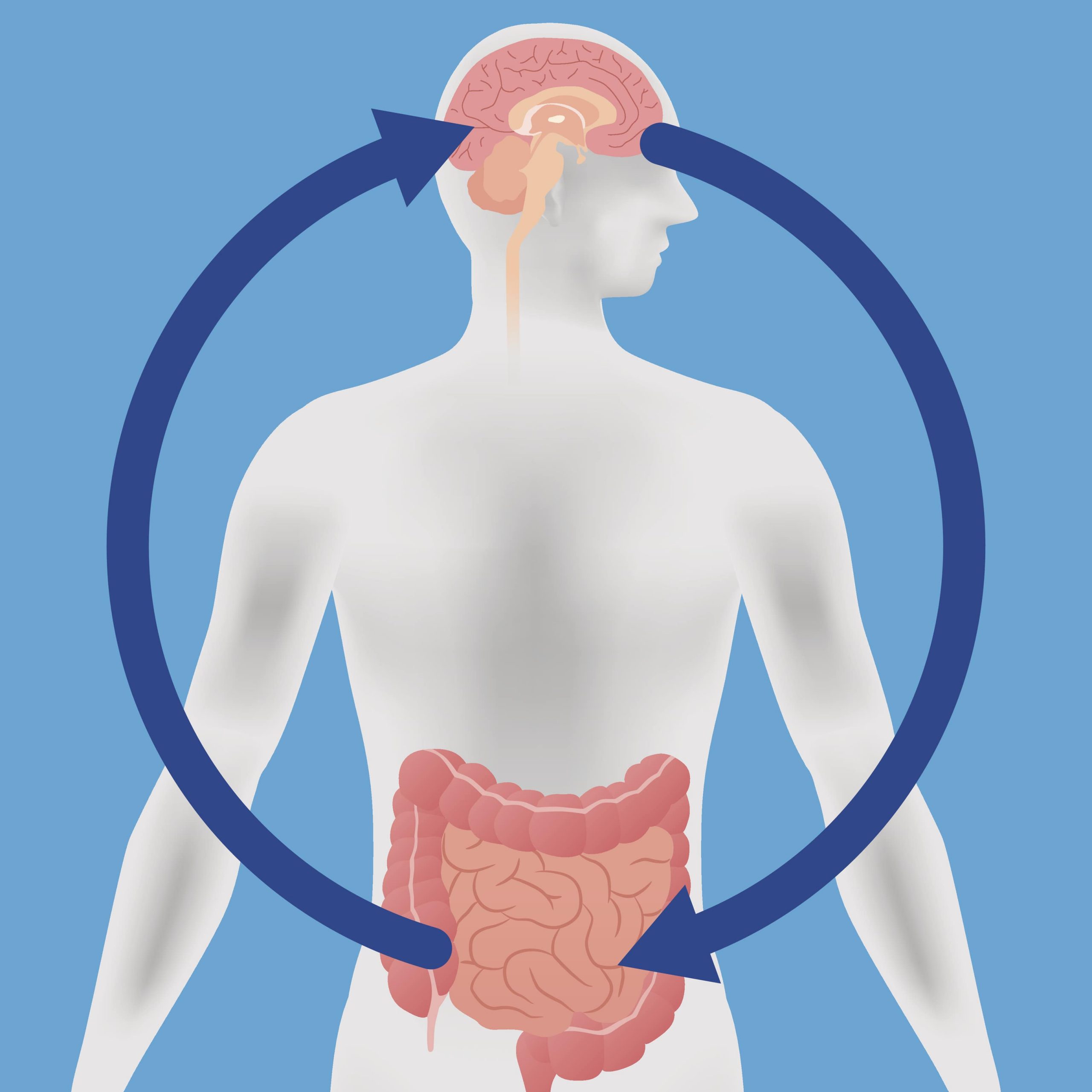
Studies continue to deepen our understanding of how interconnected the gut is with our brain’s function, including our mental well-being.
As many as 80-90% of the fibers in the vagus nerve are linked to the gut, providing a physical communication link between our gut and brain.
The “psychobiome” refers to the totality of interactions between the gut microbiome, brain function, and our mood. Mood probiotics support these functions.
As our understanding of brain-gut interactions expands, we’re learning how microbiome diversity, as well as strain-specific effects, may have more influence on our mood and sense of well-being than we ever believed was possible!
Foremost, the communication pathways from the gut to the brain are over eight times more prevalent than pathways traveling top-down from the brain (1).
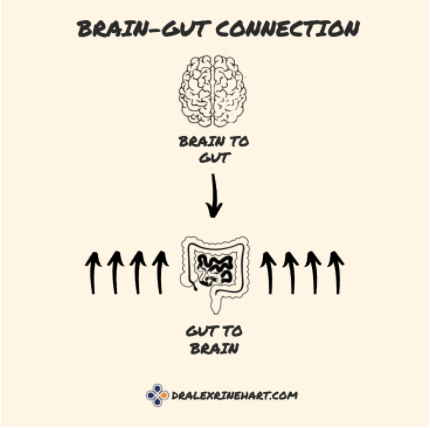
The gut has been referred to famously as the “second brain”. The enteric nervous system is controlled primarily by the vagus nerve – named for its web-like fanning out over the digestive system.
Because more messages travel from the gut to the brain, the gut has distinct functions that occur outside conscious thought. It turns out these functions are significantly modulated by microbiome diversity and interactions among specific probiotic strains.
Your “gut feeling” has real underpinnings in the interactions among gut bacteria, inflammation, leaky gut, neurotransmitters, immune cells, and other messengers shuttled back and forth along the vagus nerve. Inflammation in the gut does not stay in the gut – and often influences the integrity of the blood-brain barrier as well.
Protecting the brain from this inflammatory spillover requires a comprehensive approach. While balancing the microbiome helps address the root cause in the gut, specific trace minerals can provide direct neuroprotective support. You can read more about how low-dose lithium orotate benefits brain health, mood, and longevity to complement your gut-brain strategy.
While overall microbiome diversity is the goal, specific bacterial strains can modulate or stimulate specific responses. I have previously written about how Bacillus spores may help with depression and brain inflammation.
Bifidobacterium longum 1714 is another very promising psychobiotic that is being studied as playing an integral role in this gut-mood connection.
Mood Probiotics for Anxiety, Depression, and Stress
Most gut bacteria reside in the large intestine after processing in the mouth and small intestine. Each stage of digestion from top to bottom optimizes the role of the subsequent region of the gut.
It turns out that as a general rule, Bifidobacteria species predominate the large intestine and make up the bulk of flora species in the gut. I’ve discussed the many benefits of bifidobacteria (article lnk) in the past. They are considered keystone species for a healthy gut microbiome.
I use Bifidobacterium Probiotic alongside Megasporebiotic as first-line probiotics as I simultaneously support small intestine and large intestine health. Often using prebiotics like SunFiber (FloraStart), or FloraSpectrum Prebiotic to support colonization as individual tolerance allows and a gut restoration protocol progresses.
Spore probiotics have been clinically shown to increase short-chain fatty acid production, reduce inflammation, heal leaky gut, and promote diversity of other strains of bacteria, including Bifidobacteria.
These findings may be why the use of Bacillus coagulans has been correlated with improvements in depression, quality of life, and sleep. This is why spore probiotics can be categorized as psychobiotics or mood probiotics.
Yet, specific strains of Bifidobacteria such as B. longum 1714 have demonstrated particular expertise when it comes to supporting the gut-brain axis and mood.
This specific strain has been clinically shown to support anxiety, stress, depression, and stress-induced sleep behaviors.
Let’s take a look at some of the findings…
- A study in mice clearly showed the behavioral and cognitive benefits of B. longum 1714, particularly in memory and learning. Researchers observed decreased anxious behavior and improved cognitive outcomes in mice with pronounced anxiety symptoms (2).
- B. longum 1714 has also shown potential for stress modulation during periods of increased stress. One example of cognitive and physical stress is that experienced by college students preparing for an important exam.
- A study conducted among college students showed improved sleep quality and duration during a high-stress exam period (3).
- Additionally, one study showed an increase in antidepressant-like behavior in a mouse model in addition to a reduction of anxiety and other stress-induced behavior (4).
- A number of other studies have also revealed the power of B. longum 1714 to dampen the effects of stress and improve memory and cognitive function.
Using B. longum 1714
A promising duo of psychobiotics developed by Microbiome Labs leverages the potential of B. longum in their Zenbiome line.
- Zenbiome Cope combines B. longum 1714 with B vitamins and a saffron extract, providing periodic support for brain health, stress, and mood.
- Zenbiome Sleep combines B. longum with L-theanine and herbal extracts regarded as supporting relaxation and restful sleep.
Support of microbiome diversity along with the modulatory benefits of specific strains, and primarily turn to Megasporebiotic and TrubifidoPRO for additional support.
The novel strain B. longum 1714, found in Cope and Sleep, may offer additional modulatory benefits along the gut-brain axis, as supported by early clinical and animal studies.