What Is Brain-Derived Neurotrophic Factor and How Can You Protect Memory and Cognitive Aging Naturally?
Think of brain-derived neurotrophic factor (BDNF) as premium growth fertilizer for your brain cells (1). Whether you are navigating a demanding career or aiming to stay sharp as you age, supporting your body’s natural BDNF production is one of the most effective ways to protect long-term mental clarity.
Daily focus, quick recall, emotional resilience, and sharp decision-making all depend on your brain’s ongoing capacity to adapt and rebuild through neuroplasticity, a process driven directly by BDNF (2, 3).
A common misconception is that brain fog, memory slips, and mental slowing are inevitable parts of growing older. While baseline brain-derived neurotrophic factor levels naturally drop over time (4), your neurological system remains remarkably adaptable. Cognitive decline is not a one-way street.
By applying a functional medicine approach (reinforcing the gut barrier, fueling cellular energy pathways, reducing dietary blockers, balancing stress hormones, and utilizing targeted nutritional protocols), you can actively safeguard your memory and foster long-term brain resilience.
- How Chronic Cortisol Harms the Hippocampus and Blocks BDNF
- Brain Fog Perimenopause: Phosphatidylcholine Benefits for Cell Structure
- How Leaky Gut and Microbiome Imbalances Lower BDNF
- Why You Can’t Out-Exercise a High-Fructose Diet
- Creatine for Brain Health and Mental Focus
- Magnesium L-Threonate Benefits: Magnesium L-Threonate vs Magnesium Glycinate
- How Sunlight Influences Gene Expression and Brain Function
- Which Exercises Stimulate BDNF the Most?
- Daily Protocol to Increase BDNF
How Chronic Cortisol Harms the Hippocampus and Blocks BDNF
Your brain continuously rewires itself based on how you use it (5). BDNF is the lead architect in this process: it keeps existing neurons alive, grows new neural connections (dendrites), and builds new synapses (6).
Most of this growth happens in the hippocampus, the brain’s center for memory, recall, and spatial navigation (7). When hippocampal BDNF levels are high, forming memories feels effortless and mental focus stays sharp.
When BDNF falls, brain structure suffers. A lasting BDNF shortage can cause the hippocampus to physically shrink, leading to persistent brain fog, mental fatigue, and trouble recalling information (4).
While BDNF serves as your brain’s primary builder, chronic stress acts as a destructive force. Under constant physical or emotional strain, the body’s primary stress-response system remains overactive. Forced into survival mode, it prioritizes stress hormones like cortisol at the expense of protective regulatory pathways. Chronically elevated cortisol impairs mental focus and directly downregulates the BDNF gene, halting the creation of new neurons in key memory centers.
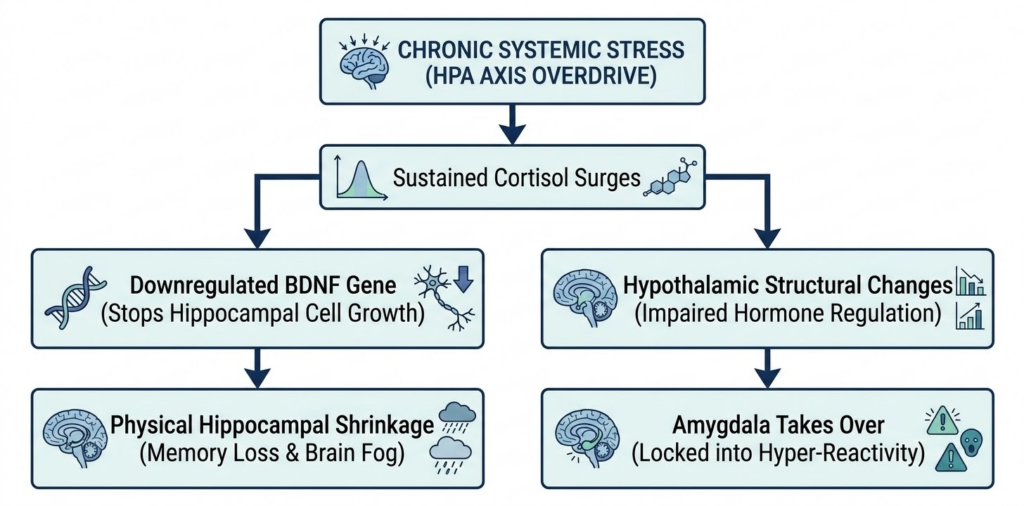
Over time, prolonged high cortisol weakens the hypothalamus and shuts down healthy hormone balance (8). As the hippocampus and hypothalamus lose their ability to regulate stress, the amygdala, which functions as the brain’s fear and threat center, takes control (9). This shift locks the nervous system into a continuous cycle of stress, fear, and brain inflammation (10). Reversing this damage requires targeted strategies that stop stress-driven memory loss.
Brain Fog Perimenopause: Phosphatidylcholine Benefits for Cell Structure
Healthy brain signaling requires both growth factors like BDNF and strong brain cell membranes (11). The brain relies on dietary choline to produce acetylcholine, the main chemical messenger needed for focus, learning, and mental processing (12).
When choline intake is too low, the brain resorts to an emergency tactic: it breaks down its own cell membranes (rich in phosphatidylcholine) to get the choline it needs for acetylcholine synthesis (13). Over time, this damages membrane integrity, reduces receptor function, and accelerates cellular breakdown (14).
This physical vulnerability is closely linked to hormone levels, especially during perimenopause and menopause (15). In the liver, an enzyme called PEMT (phosphatidylethanolamine N-methyltransferase) produces choline and essential protective cell-building fats (phosphatidylcholine) internally (16). Crucially, estrogen directly activates the PEMT gene, driving this internal choline-making process (17).
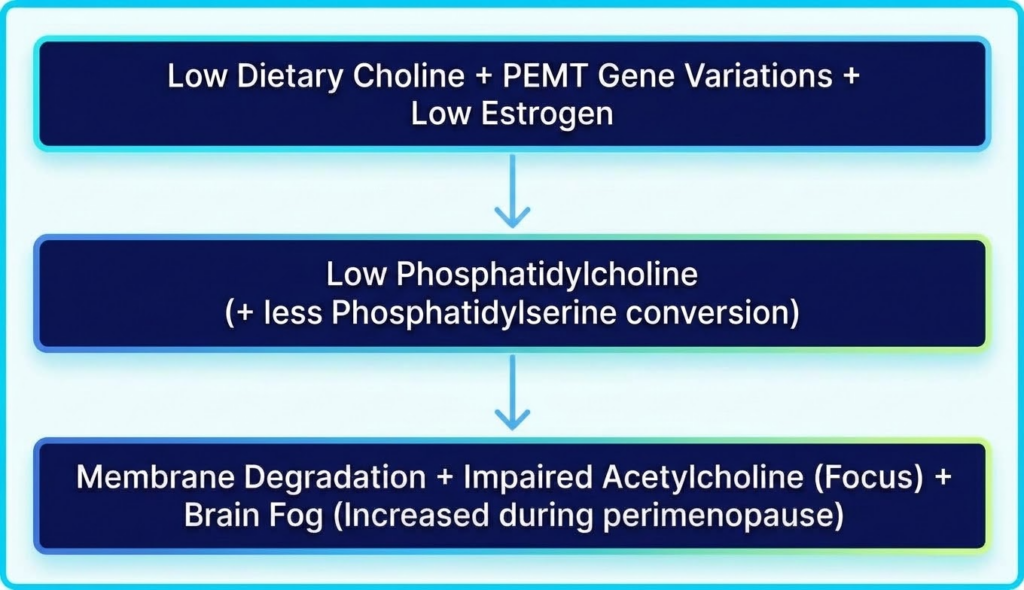
When estrogen levels decline during perimenopause and menopause, PEMT activity slows down, and internal choline synthesis drops significantly (18).
Without adequate dietary choline, the brain auto-cannibalizes its own cell membranes to produce acetylcholine. To understand how the PEMT pathway shapes cell membrane integrity, explore our deep dive on phosphatidylcholine and the PEMT pathway.
Women navigating this transition, especially those with common genetic variations in the PEMT gene, frequently experience accelerated membrane breakdown, cognitive fatigue, and persistent brain fog.
To help safeguard structural cell membranes and alleviate perimenopausal brain fog, increasing dietary choline or taking a targeted phosphatidylcholine supplement provides essential building blocks for long-term cellular stability and brain function (15). Professional-grade formulations such as BioPath Renew: Phosphatidylcholine and Phosphatidylserine by Doctor Alex Supplements supply these critical phospholipids directly to help maintain structural integrity.
Alongside choline and phospholipids, omega-3 fatty acids, specifically docosahexaenoic acid (DHA) and eicosapentaenoic acid (EPA) found in high-quality fish oil options like Omega Complete: EPA, DHA, and DPA Support by Doctor Alex Supplements, serve as crucial structural components of neuronal cell membranes. DHA makes up a significant portion of brain cell membrane fats, supporting proper receptor alignment and neurotransmitter signaling.
Research indicates that omega-3 supplementation directly enhances BDNF gene expression, promoting synaptic plasticity and working synergistically with choline to support structural membrane resilience against age-related degradation (19).
At the same time, brain function depends on healthy blood flow. Although the brain accounts for only 2% of total body weight, it consumes about 20% of the body’s blood flow and oxygen (20). This circulation requires nitric oxide (NO) to widen tiny blood vessels and supply the prefrontal cortex, which is the region responsible for decision-making, planning, and focus (21).
Natural nitric oxide production drops by up to 50% by age 40 and up to 85% by age 60, reducing the oxygen and nutrients reaching the prefrontal cortex, which supports decision-making, planning, and focus (22). Targeted nutritional support such as Nitric Oxide Foundation by Berkeley Life Professional helps restore optimal nitrate pathways. Because nitric oxide crosses into brain tissue and directly supports BDNF production, maintaining healthy nitric oxide levels is essential for mental clarity as you age (23).
Learn more about nitric oxide benefits.
How Leaky Gut and Microbiome Imbalances Lower BDNF
Modern functional medicine demonstrates that cognitive health often originates in the gut rather than the brain (24). The gut and brain maintain continuous two-way communication via circulation and the vagus nerve (25). Remarkably, 80% to 90% of vagal nerve fibers transmit signals upward from the digestive tract to the brain (26). As a result, nurturing the gut ecosystem directly affects daily mood, concentration, and neurotransmitter balance (27).
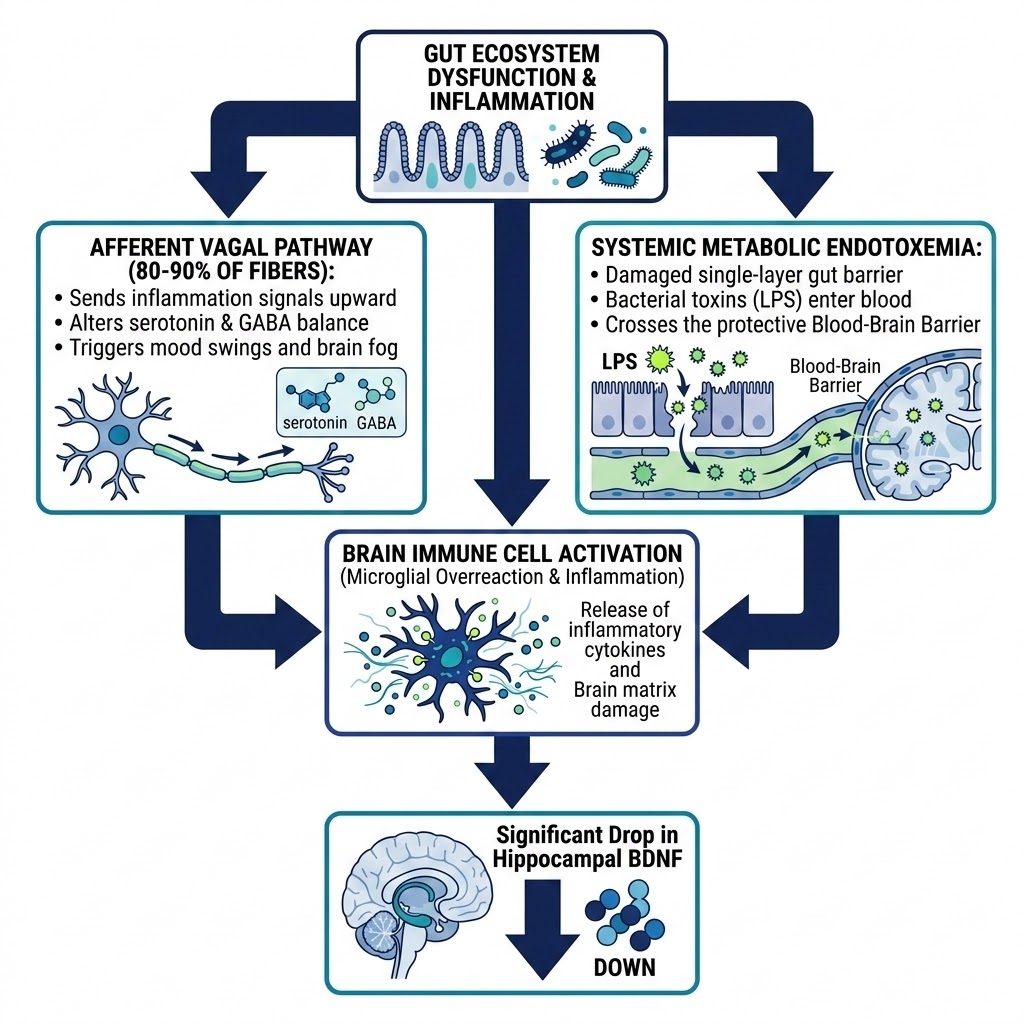
The gut lining is a paper-thin layer that absorbs nutrients while keeping out bacteria and toxins. When poor diet, stress, or medications damage this barrier, inflammatory bacterial fragments leak into the bloodstream (28). This creates low-grade, body-wide inflammation known as leaky gut inflammation, which can weaken the protective blood-brain barrier (29).
Once gut toxins enter the brain, specialized resident immune cells overreact (30). Instead of performing routine cleanup, these overexcited immune defenders flood the brain with inflammatory chemical signals, accidentally damaging healthy brain cells (31). This inflammatory reaction acts like an off-switch for BDNF production in the memory center, leading to severe brain fog, memory issues, and mental fatigue (32).
Antibiotics and poor gut bacterial diversity can suppress hippocampal BDNF (33). Rebuilding healthy brain cell growth requires a comprehensive strategy to restore the gut lining and balance the gut ecosystem:
- Targeted Gut Toxin Clearance: Clinical studies show that supplementing with spore based probiotics (such as Megasporebiotic by Microbiome Labs, containing Bacillus subtilis, Bacillus coagulans, and Bacillus clausii) can support gut barrier integrity and lower circulating endotoxin levels by 42% in 30 days (34).
- The Estrogen-Gut Connection: The microbiome contains a group of bacterial genes known as the “estrobolome,” which helps recycle active estrogen back into the bloodstream (35). Because estrogen boosts BDNF and helps the liver make choline for brain membranes, gut imbalances that disrupt the estrobolome can accelerate brain fog during menopause. Restoring healthy gut bacteria helps maintain protective estrogen levels even as ovarian production declines.
- Targeted Psychobiotics: Psychobiotics are specific probiotic strains proven to support mood and cognitive health. The strain Bifidobacterium longum 1714 helps calm the stress response and lower cortisol (36).
Brain wave scans show that B. longum 1714 promotes calm, focused mental clarity without causing drowsiness (36).
Incorporating targeted psychobiotic support like Zenbiome Cope by Microbiome Labs provides B. longum 1714 alongside supportive B vitamins and saffron extract for comprehensive daytime mood, clarity, and stress regulation support.
Check out our deep dive on the psychobiotic benefits of Bifidobacterium longum 1714. - Neuroprotective Postbiotics: Postbiotics are beneficial compounds created when gut bacteria process nutrients. Beyond short-chain fatty acids like butyrate that nourish the gut lining, healthy bacteria convert the amino acid L-tryptophan into Indole-3-propionic acid (IPA). IPA crosses into the brain as a powerful antioxidant that protects sensitive memory structures from cell damage (37).
- Plant Polyphenols & Akkermansia Support: Antioxidants in wild blueberries, dark cocoa, and green tea feed beneficial gut microbes and can also reach the brain to support BDNF production (38, 39, 40). To directly target and nourish this critical keystone strain, consider incorporating Akkermansia by Pendulum alongside Polyphenol Booster by Pendulum to promote gut lining integrity, stimulate Akkermansia muciniphila growth, and foster sustained BDNF signaling (39).
Why You Can’t Out-Exercise a High-Fructose Diet
Exercise is well known to trigger new brain cell growth (41). However, modern metabolic research highlights a clear limit: physical exercise cannot overcome the harmful impacts of a diet high in processed fructose (42, 43).
High-fructose corn syrup and refined sugars stress the liver, alter gut bacteria, damage the gut lining, cause brain fog, and induce insulin resistance in the liver and brain (44).
Diets loaded with refined sugars and processed fats make brain cell receptors less responsive to growth factors (45). While intense exercise releases BDNF into the body, high fructose blocks the chemical pathways inside brain cells that receive the growth signal (specifically TrkB receptors) (46). As a result, the brain can’t respond effectively to its own repair signals. Removing refined sugars is necessary for BDNF to rebuild hippocampal connections.
Creatine for Brain Health and Mental Focus
The human brain uses a massive amount of energy and requires a constant supply of Adenosine Triphosphate (ATP) to power electrical signals and memory function. When insulin resistance affects the brain, a condition sometimes called “Type 3 Diabetes,” brain cells struggle to absorb glucose (47). Low on cellular fuel, hippocampal neurons enter an energy-saving state, leading to slower processing, mental fatigue, and reduced BDNF production (48).
Overcoming this energy shortage requires metabolic flexibility: providing alternative brain fuels that do not rely on broken glucose transport systems.
| Metabolic Brain Substrate | Mechanism of Action | Clinical Neurological Benefit |
|---|---|---|
| Creatine | Recycles used ADP back into active ATP energy through the phosphocreatine system (49). | Restores depleted cellular energy reserves during intense, demanding mental work (50). |
| Exogenous Ketones (Beta-HBA) | Crosses into the brain via monocarboxylate transporters, bypassing broken glucose pathways (51). | Serves as a clean alternative fuel, reducing brain inflammation and promoting BDNF production (52). |
| Medium-Chain Triglycerides (MCTs) (e.g., dietary options like MCT Powder by Metagenics) | The liver converts them into ketone bodies for energy as part of normal metabolism. | Provides a steady supply of backup fuel to energy-depleted brain cells. |
| Targeted Phospholipids (PC/PS) | Integrates directly into damaged cell membranes and mitochondrial membranes (53). | Stops the self-breakdown of cell membranes and restores proper receptor function (54). |
Creatine’s effect on brain energy is significant: it acts like a fast-rechargeable battery, quickly providing energy to keep brain cells running smoothly (55).
Creatine functions as an emergency battery reserve, donating phosphate groups to rapidly recharge depleted ATP molecules during high-demand mental tasks. However, systemic inflammation downregulates the intestinal SLC6A8 transporters required to move creatine across the gut wall.
Read our deep dive on using creatine for brain fog and mental focus.
Targeted functional supplementation with high-solubility formulations such as Opti-Absorb Creatine by Doctor Alex Supplements supports cellular energy turnover, which is especially important for women, who naturally store 70% to 80% less creatine in their tissues than men.
The Impact of Creatine for Women’s Brain Health
Women experience regular hormone shifts that can lower how much creatine their bodies make naturally. Using targeted creatine for women is crucial because female physiology stores 70% to 80% less creatine in tissues than men. When chronic stress drains cellular energy or dropping estrogen levels weaken brain cell outer walls, low creatine reserves leave women especially prone to brain fog and mental fatigue (56). Supplying high-solubility creatine helps replenish these vital energy stores and protect cognitive performance.
Optimal Creatine Dose for Brain Health and Focus
Determining the effective creatine dose for brain health involves consistent daily administration to fully saturate central tissue stores. Clinical research suggests that a daily dose of 3g to 5g of high-solubility monohydrate provides optimal daily support for neuronal ATP turnover and mental clarity without requiring heavy loading phases.
However, oral creatine only works if it reaches the brain. Creatine must cross the gut lining and blood-brain barrier via specialized cellular doorway channels. Body-wide inflammation and gut toxins reduce these channels’ activity (57). If your gut is inflamed, creatine can get trapped in circulation instead of reaching your brain cells.
Healing gut inflammation, particularly by supporting beneficial Bifidobacteria strains, increases the activity of these transport channels, allowing creatine to cross into brain tissue efficiently (58).
Magnesium L-Threonate Benefits: Magnesium L-Threonate vs Magnesium Glycinate
To build new brain connections, the nervous system benefits from key targeted supplements:
Magnesium L-Threonate vs Magnesium Glycinate: Magnesium is an essential mineral involved in over 300 enzymatic processes in the body. It helps balance NMDA receptors to prevent nerve cell overstimulation (59). When evaluating magnesium l threonate vs magnesium glycinate, selecting the best form depends on your specific health goals:
- Magnesium Glycinate: This form of magnesium glycinate is combined with glycine to relax muscles, support gut motility, and calm overall bodily stress, making it a great daily option for general systemic wellness.
- Magnesium L-Threonate: This targeted form (such as professional-grade Magnesium L-Threonate by Ortho Molecular Products) easily crosses both the gut wall and the blood-brain barrier. Clinical research shows L-threonate raises magnesium levels inside brain fluid, directly supporting synapse density, memory formation, and BDNF signaling (60).
What is Magtein and How Does it Cross the Blood-Brain Barrier?
- If you are wondering what is Magtein, it is a patented form of magnesium L-threonate specifically synthesized to effectively penetrate the protective blood-brain barrier. By successfully crossing into central brain fluid, Magtein elevates brain magnesium concentrations higher than other magnesium compounds, directly bolstering synaptic density, cognitive speed, and neuroplasticity. It is the form used by our recommended Ortho Molecular Product.
Other Brain-Supporting Nutrients
- Lion’s Mane Mushroom (Hericium erinaceus): High-quality standardized extracts such as Lion’s Mane PRO by Gaia Herbs Professional Solutions contain natural active compounds (hericenones and erinacines) that support Nerve Growth Factor (NGF) and BDNF expression, offering nutritional support for nerve health and intestinal tissue repair (61).
- Highly Absorbable Curcumin: Standard curcumin from turmeric is poorly absorbed. Specialized, bioavailable formulations such as Curalieve by Integrative Therapeutics provide targeted antioxidant support to modulate key inflammatory signaling pathways (NF-kB), help buffer central tissue stress, and support healthy BDNF production (62).
- Low-Dose Lithium Orotate: Supplemental options such as Lithium Orotate 5mg by Pure Encapsulations offer micro-dose nutritional support to help modulate enzymes associated with cellular stress. By supporting baseline stress responses, low-dose lithium nutritionally encourages neural repair pathways, supports BDNF expression, and aids emotional stability (63). We reviewed the latest research in our article on low-dose lithium orotate for brain health and longevity.
How Sunlight Influences Gene Expression and Brain Function
Sunlight exposure is far more than a relaxing habit; it is a fundamental signal for gene health and biological rhythm.
Vitamin D functions less like a standard vitamin and more like a powerful steroid hormone that regulates over 200 genes in the human body (64). Vitamin D Receptors (VDR) are located throughout the central nervous system, with dense concentrations in memory and processing centers like the hippocampus and prefrontal cortex (65).
Ready to implement this protocol? Shop all recommended functional supplements in our Brain Health Supplements collection.
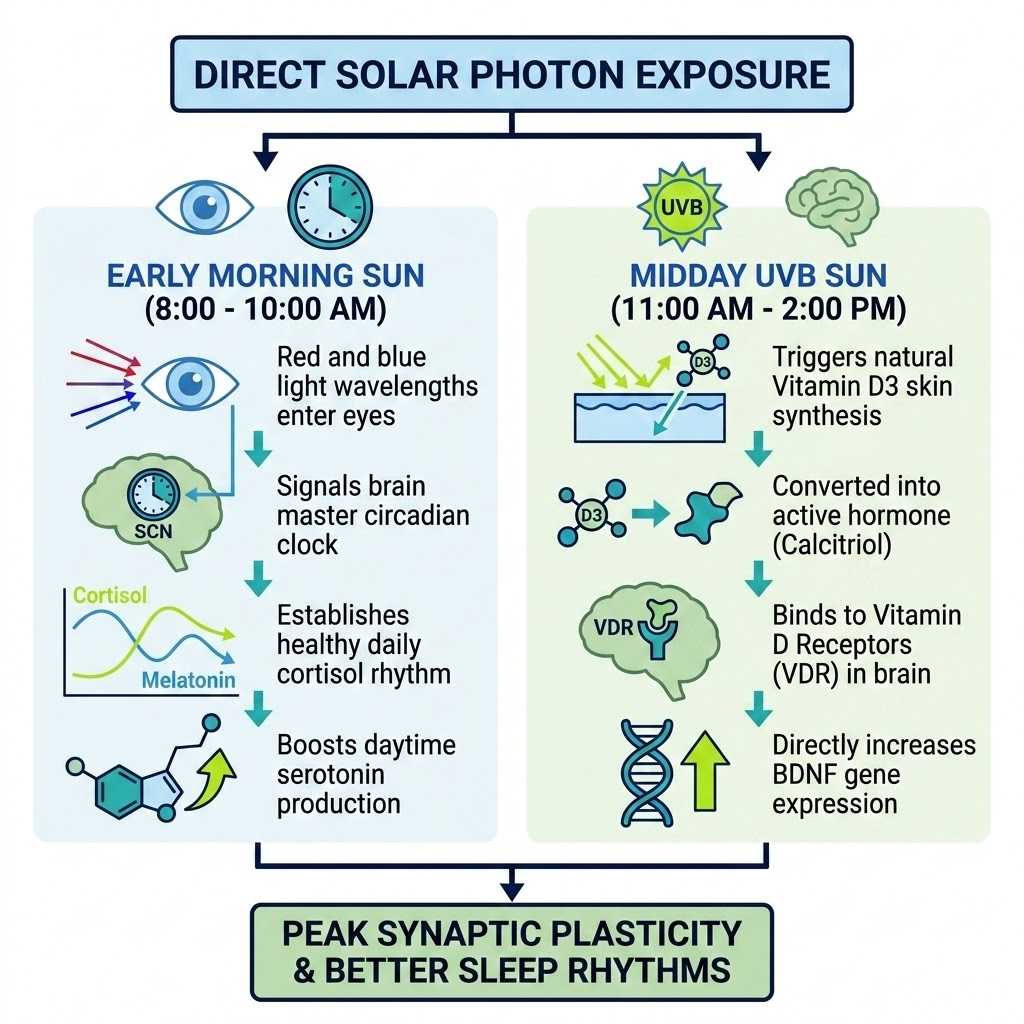
When active Vitamin D binds to its receptors in the brain, it signals DNA to increase growth factor production, driving higher levels of BDNF and related protective proteins like GDNF (66).
At the same time, getting natural morning sunlight between 8:00 AM and 10:00 AM stimulates light receptors in the eyes, setting the brain’s internal master clock in the suprachiasmatic nucleus (SCN). This stabilizes daytime energy, regulates stress hormones, and prepares your body to release melatonin at night, a key sleep hormone that protects brain cells from oxidation (67).
Aim for blood 25-hydroxyvitamin D levels between 50 and 70 ng/mL, as standard minimum cutoffs (20 to 30 ng/mL) are often too low to support the wide range of vitamin D benefits (68). When sun exposure is insufficient, supplementing with a synergistic fat-soluble formula like Vitamin A D K Complete by Doctor Alex Supplements provides targeted nutritional support for vitamin D3 status alongside vitamins A and K2 for optimal bone, vascular, and neurological health maintenance.
How Sauna Heat and Heat Shock Proteins Support Brain Longevity
Deep brain repair, memory storage, and neural cleanup happen primarily during restful recovery states.
During deep, slow-wave sleep, the brain’s waste clearance system (the glymphatic system) opens microscopic channels to flush out metabolic waste, damaged proteins, and toxic plaques built up throughout the day (69). At the same time, BDNF helps transfer short-term memories into permanent long-term storage (70).
To boost this recovery process, deliberate heat exposure, such as using a heat shock protein sauna protocol, acts as a healthy mild stressor. Exposing the body to heat (175°F to 195°F for 20 minutes) triggers a helpful survival response (71):
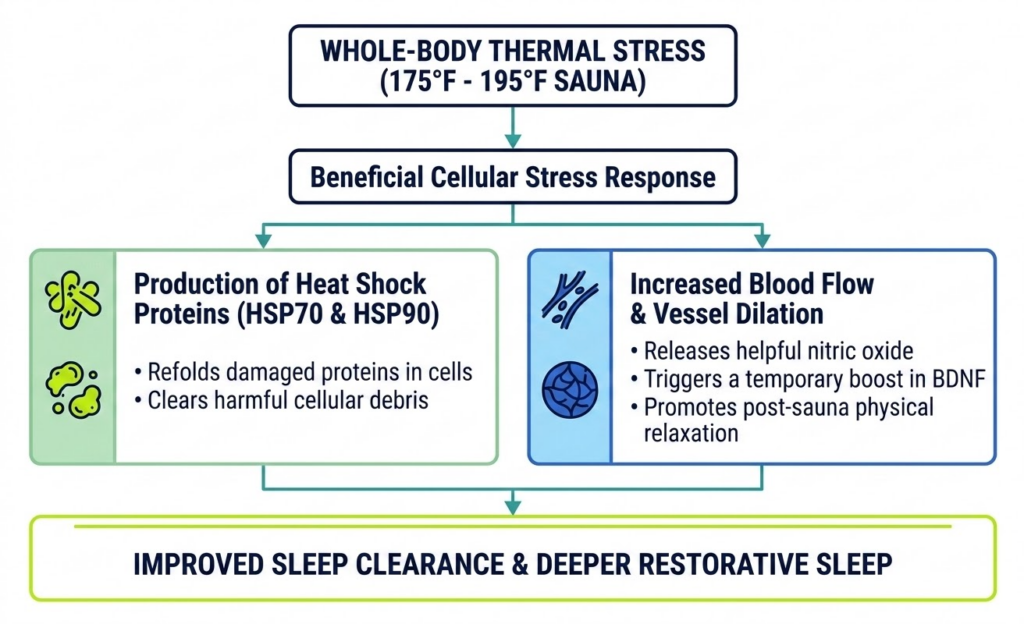
Heat Shock Proteins (mainly HSP70 and HSP90) work like a cell repair crew, refolding damaged proteins and preventing toxic protein buildup (72). Meanwhile, heat increases blood circulation, which can temporarily boost BDNF (73). When done in the late afternoon or evening, a sauna session helps lower core body temperature afterward, encouraging deep sleep and improving brain waste clearance (74).
Which Exercises Stimulate BDNF the Most?
Exercise directly influences brain health: the type, intensity, and muscle load of your workout determine how much BDNF your body releases.
- Heavy Strength Training: Compound movements like deadlifts, squats, and presses place a high demand on the central nervous system. In addition, building muscle mass creates a primary sink for excess blood sugar. Clearing glucose from the blood independently of large insulin spikes improves overall insulin sensitivity, removing metabolic blocks that suppress BDNF (75).
- High-Intensity Interval Training (HIIT): Short, intense bursts of effort engage fast-twitch muscle fibers and produce higher levels of circulating lactate. Rather than just a fatigue byproduct, lactate crosses the blood-brain barrier and serves as a direct chemical signal that triggers a rapid release of BDNF in the hippocampus (76).
Daily Protocol to Increase BDNF
Translating neuroscience into daily practice does not need to be complex. Here is a practical, evidence-based daily protocol designed to optimize the gut-brain axis, support BDNF production, and maintain lifelong cognitive health:
| PHASE | Target Time | ACTIONABLE BLUEPRINT |
|---|---|---|
| Phase 1: Morning Activation | 6:00 AM – 9:00 AM | • Sunlight & Vitamin D Support: Get 10–15 minutes of direct morning sunlight to set your internal clock. If sun exposure is limited, consider a functional nutritional formula like Vitamin A D K Complete by Doctor Alex Supplements with a fat-containing meal to support optimal vitamin D status and related gene-expression pathways. • Hydration: Drink 16–20 oz of water with electrolytes to restore fluid balance and blood flow. • Exercise Routine: Alternate days between strength training and short interval workouts. • Nutritious Breakfast: Eat high-quality protein and antioxidant-rich berries. Avoid added sugars. |
| Phase 2: Midday Energy & Gut Support | 12:00 PM – 2:00 PM | • Gut Barrier Defense: Consider targeted spore-based probiotic support (such as Megasporebiotic by Microbiome Labs) with a meal to support gut barrier integrity and manage endotoxin burden. Include nitrate-rich foods (arugula, beets) to support cerebral blood flow. • Cellular Energy Support: Incorporate high-solubility creatine (such as Opti-Absorb Creatine by Doctor Alex Supplements) to provide nutritional support for cellular ATP reserves in brain tissue. • Brain Cell Support: Utilize bioavailable Omega-3 fatty acids (such as Omega Complete: EPA, DHA, and DPA Support by Doctor Alex Supplements) and targeted phospholipids (such as BioPath Renew: Phosphatidylcholine and Phosphatidylserine by Doctor Alex Supplements) to nutritionally support cell membrane structure and fluidity. Consider brain-penetrating mineral support like Magnesium L-Threonate by Ortho Molecular Products. |
| Phase 3: Evening Recovery & Sleep | 6:00 PM – 10:00 PM | • Sauna Session: 3–4 times a week, spend 20 minutes in a sauna (175°F–195°F) to trigger heat shock proteins and promote relaxation. • Relaxing Supplements: Consider targeted evening psychobiotics such as Zenbiome Sleep by Microbiome Labs, which pairs Bifidobacterium longum 1714 with L-theanine and lemon balm extract to nurture the gut-brain axis, promote relaxation, and support restorative sleep quality, or professional-grade adaptogenic blends featuring Bacopa monnieri such as Brain Fog Support Advanced by Doctor Alex Supplements. • Screen Curfew: Turn off electronic screens 90 minutes before bed to allow natural melatonin production. • Sleep Environment: Sleep in a cool (60°F–65°F), dark room to encourage deep sleep and optimal brain waste clearance. |
Sustaining mental clarity and long-term brain health relies on consistent, intentional daily habits. By protecting your gut lining, maintaining cell membrane structure, supporting cellular energy production, and leveraging key lifestyle triggers, you can support your body’s innate capacity for neurological renewal.
Frequently Asked Questions (FAQs)
How long does it take to increase BDNF levels with this protocol?
Immediate habits like high-intensity exercise or sauna sessions cause measurable temporary increases in BDNF within hours. However, repairing the gut lining and restoring hippocampal brain structures takes time. Clinical trials show that spore-based probiotics can significantly reduce blood toxins (LPS) within 30 days, while noticeable improvements in focus and mental clarity usually show up after 8 to 12 weeks of consistent diet and lifestyle habits.
How to get rid of a foggy head?
To get rid of a foggy head, eliminate refined sugar and high-fructose foods, hydrate with electrolytes, get 10 minutes of morning sunlight, and support your gut-brain axis using spore-based probiotics, phosphatidylcholine, and brain-penetrating Magnesium L-Threonate to restore cellular energy and focus.
Does sugar cause brain fog?
Yes, sugar causes brain fog. High fructose and refined sugars drive insulin resistance in brain cells, trigger gut lining inflammation, and impair TrkB growth factor receptors, blocking brain-derived neurotrophic factor (BDNF) signals necessary for mental clarity, recall, and optimal focus.
Can regular probiotics and fermented foods heal gut leakage?
While fermented foods like sauerkraut and kefir support basic gut diversity and provide valuable substrates the body uses, they often aren’t enough to manage significant gut barrier dysfunction or systemic endotoxin burden. Moreover, stomach acid destroys many standard probiotic strains before they reach the lower digestive tract. Spore-forming Bacillus probiotics (such as B. subtilis and B. coagulans) survive stomach acid to reach the lower gut, offering functional support by reinforcing tight junctions and helping maintain healthy blood endotoxin levels (citation needed).
Why do women experience more brain fog during perimenopause?
Perimenopausal brain fog happens due to a combination of hormonal and cellular changes. Estrogen helps trigger brain-growth factors (BDNF) and activates the PEMT (phosphatidylethanolamine N-methyltransferase) enzyme in the liver, which builds phosphatidylcholine, the healthy fats brain cells need for their outer membranes.
As estrogen levels decline during perimenopause, PEMT activity slows down and internal production drops, forcing brain cells to break down their own outer membranes for essential nutrients. Direct supplementation with phosphatidylcholine or extra dietary choline helps protect cell membranes.
At the same time, women naturally store 70% to 80% less creatine than men. When stress-related cortisol surges drain cellular energy, low creatine stores leave brain cells without enough fuel to function efficiently, leading to mental fatigue and slower focus.
Is creatine only useful for strength training and muscle growth?
Not quite. While popular in fitness, creatine is equally valuable for brain energy. The brain, while only 2% of body size, consumes about 20% of the body’s daily energy budget. Creatine acts like a rapid fuel reserve for neurons, helping restore depleted ATP during mental effort. Women, vegetarians, and stressed adults often have lower natural brain creatine levels, making supplementation an effective way to improve mental focus.
Why not use standard magnesium oxide or glycinate for brain health?
Different magnesium forms target different tissues. Magnesium oxide is poorly absorbed, while magnesium glycinate supports muscle relaxation, digestion, and overall calm. However, neither form crosses the protective blood-brain barrier effectively.
Magnesium L-threonate is specifically designed to cross into the brain, raising brain magnesium levels to support memory and BDNF activity, along with magnesium’s other functional benefits.
| Ready to implement this protocol? Shop all recommended functional supplements in our Brain Health Supplements collection to support your ongoing cognitive vitality. |
|---|