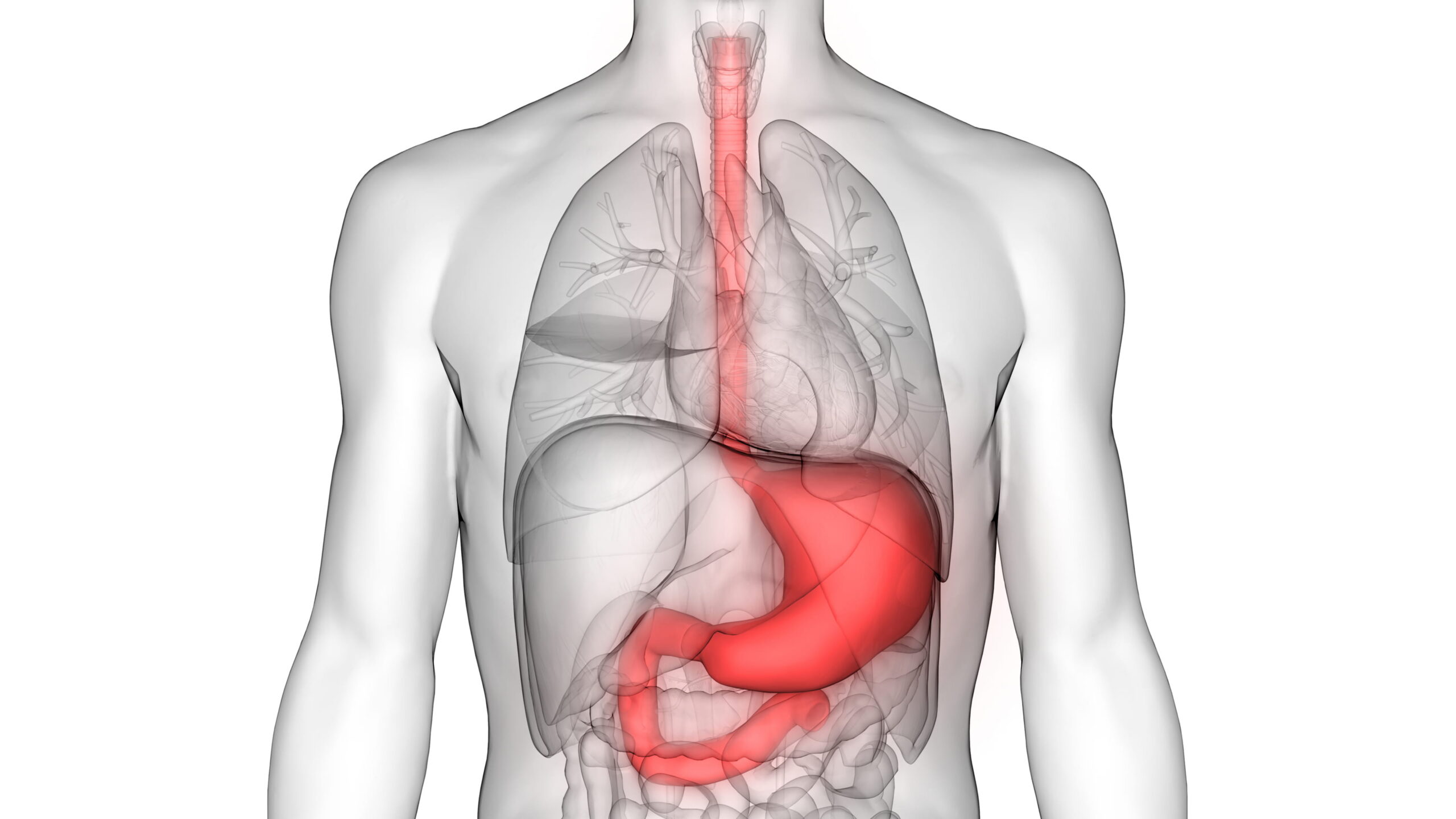
The Quick Answer: The gastric mucosal barrier is a protective, continuous mucus shield that guards the entire digestive tract. In the stomach, it prevents stomach acid from irritating tissue and causing gastritis (1).
- What it does: The gastric mucosal barrier acts as an acid-proof shield, keeping harsh stomach acid (pH 1.5 to 3.0) from damaging your stomach wall (2).
- Top 3 factors that damage it: Frequent use of nonsteroidal anti-inflammatory drugs (NSAIDs like ibuprofen or aspirin), chronic Helicobacter pylori (H. pylori) bacterial infections, and heavy alcohol consumption (3).
- Top 3 recovery strategies: Remove main irritants (including H. pylori), soothe and coat the lining with protective herbs like DGL and mastic gum, and rebuild tissue with Zinc Carnosine (4).
1. What the Stomach Lining Actually Does
To heal your stomach lining, it helps to understand how your body protects itself. Your stomach lining and intestinal wall form a continuous digestive defense system. Each section adapts to handle specific jobs while sharing a unified mucosal barrier (5).
The Mucus-Bicarbonate Barrier
Your entire gut relies on a protective mucus layer and supportive gut bacteria (such as Akkermansia muciniphila) to keep tissue healthy (6). In the stomach, specialized cells produce a particularly thick mucus gel layer to withstand intense acid levels (pH 1.5 to 3.0) (7).
Underneath this mucus coating, surface cells release bicarbonate (HCO3−) to neutralize acid before it hits the tissue (8). Together, mucus and bicarbonate create a protective buffer zone against acid irritation (9).
Stomach Lining vs. Intestinal Lining: A Clinical Distinction
It is easy to confuse stomach lining issues (like gastritis or ulcers) with gut wall problems (like “leaky gut”). Here is how they differ:
| Feature | Gastric Mucosal Barrier (Stomach) | Intestinal Barrier (Gut) |
|---|---|---|
| Primary Shield | A thick layer of protective mucus mixed with neutralizing bicarbonate | A single layer of cells joined together by tight junctions |
| Main Job | Protects stomach tissue from strong digestive acid (pH 1.5–3.0) | Absorbs nutrients while keeping harmful particles out of the bloodstream |
| Pathology | Gastritis, stomach lining irritation, or ulcers | Leaky gut (intestinal permeability) and intestinal inflammation |
| Primary Stressors | NSAIDs, H. pylori infection, alcohol, and bile reflux | Imbalanced gut bacteria, ultra-processed foods, food additives, and stress |
| Common Test | Endoscopy, plus H. pylori breath or stool testing (sucrose absorption testing is used mainly in research settings) | Lactulose-to-mannitol ratio (LMR) testing |
While the intestines rely on tight cell connections to absorb food, the stomach uses a heavy physical shield against acid (10). Because both areas share the same underlying mucosal defense network, supporting healthy mucus and beneficial gut microbes helps protect your whole GI tract while giving your stomach lining the support it needs to rebuild (11).
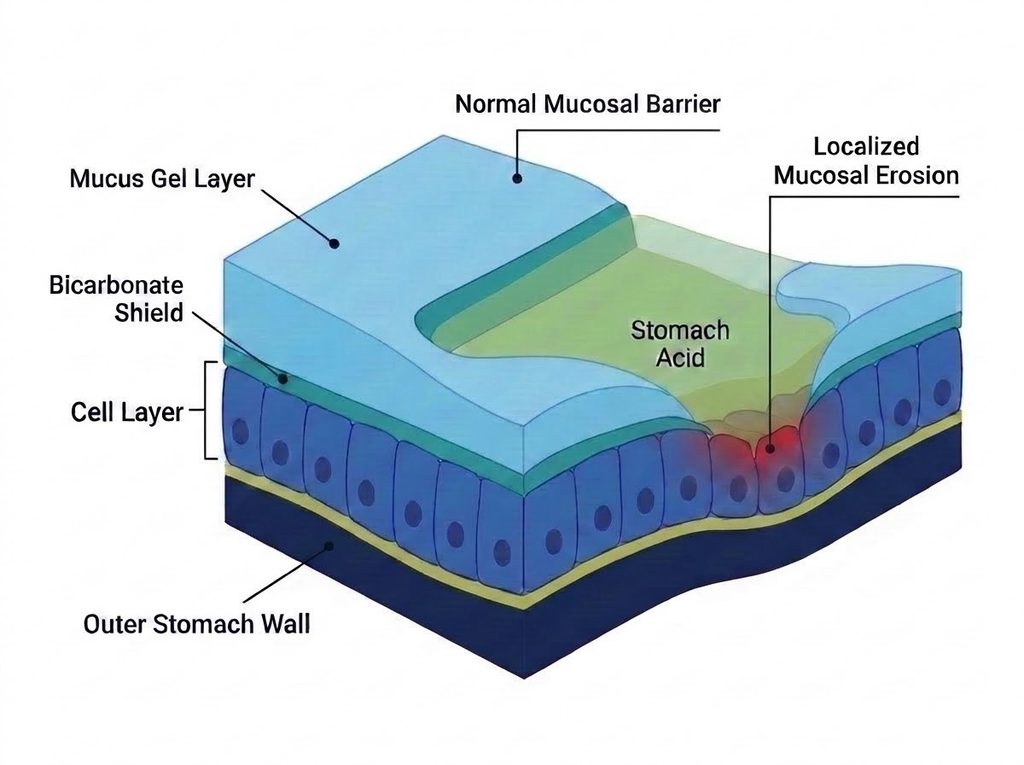
Key Takeaway: The stomach relies on a heavy mucus-bicarbonate shield against acid, while the intestines use tight cellular junctions (4). Supporting shared mucosal defenses protects your entire digestive tract (12).
2. Signs Your Stomach Lining is Irritated
When the gastric mucosal barrier breaks down, stomach acid contacts the underlying tissue directly, triggering localized irritation and inflammation (gastritis) (13).
Symptom Breakdown
Common signs of an irritated stomach lining include:
- Burning Pain: A burning or gnawing ache in your upper stomach that often feels worse when your stomach is empty (14).
- Nausea and Feeling Full Quickly: Feeling sick to your stomach or getting full after only a few bites (15).
- Indigestion and Bloating: Feeling overly full, swollen, or bloated after meals due to inflammation (15).
The Trigger Test
A practical indicator of an irritated stomach lining is how it reacts to specific dietary triggers. Burning pain after taking NSAIDs (like ibuprofen or aspirin) on an empty stomach, or immediately following alcohol consumption, signals a compromised mucosal barrier (3).
Key Takeaway: Burning epigastric pain after taking NSAIDs or consuming alcohol is a clear indicator of a compromised mucosal lining (3).
3. When to See a Doctor (Red Flag Symptoms)
Before starting a self-care plan, it is important to rule out more serious problems. While mild gastritis often improves with dietary modifications and soothing, tissue-coating botanicals, severe bleeding or deep tissue damage requires immediate medical evaluation (13).
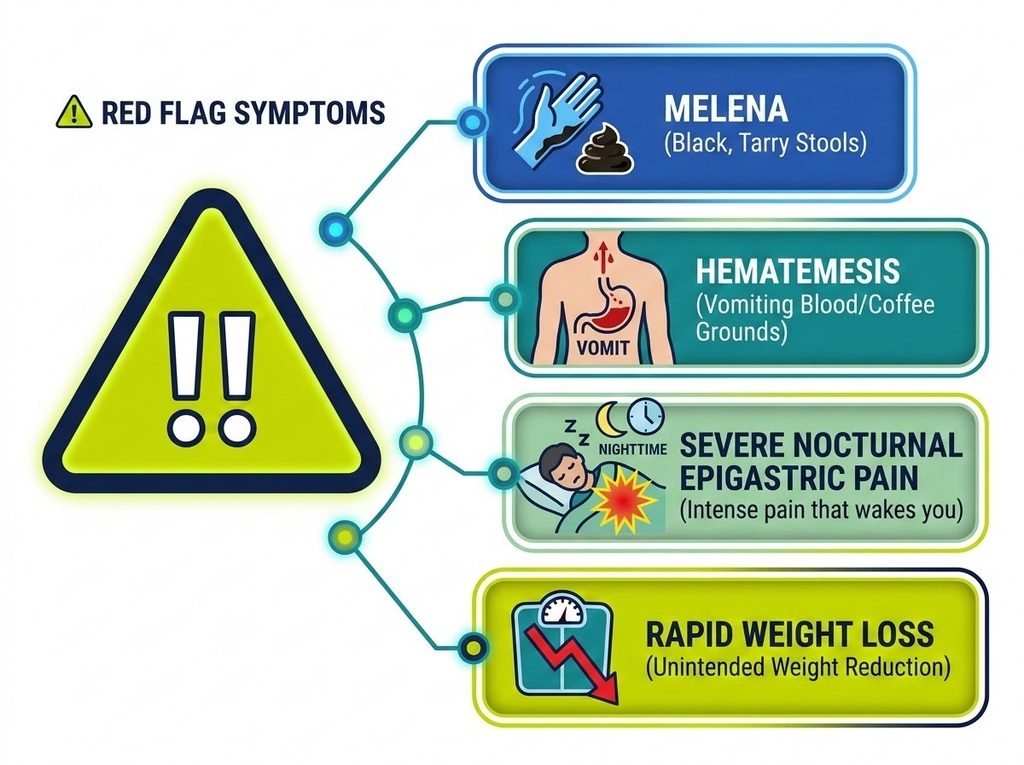
⚠️ Warning Signs: Seek immediate medical care if any of the following red flag symptoms occur:
- Black or Tarry Stools: Dark, tar-like stools, which can indicate internal digestive bleeding.
- Vomiting Blood: Throwing up blood or dark material that looks like coffee grounds.
- Severe Nighttime Pain: Sharp, intense stomach pain that wakes you from sleep.
- Unexplained Weight Loss or Trouble Swallowing: Losing weight suddenly without trying, or having a hard time swallowing food.
Key Takeaway: Severe symptoms like dark stools, bloody vomit, intense nocturnal pain, or sudden weight loss require prompt medical evaluation (13).
4. What Damages the Gastric Mucosal Barrier?
While mucosal defenses naturally protect and repair tissue, specific external stressors break down this shield, so reducing ongoing damage is the first step to help the stomach lining heal. The three most common culprits are NSAIDs, alcohol, and H. pylori, with chronic stress and long-term acid suppression adding further strain on the gastric mucosal barrier (3):
NSAIDs (Ibuprofen, Aspirin, Naproxen)
Frequent use of nonsteroidal anti-inflammatory drugs (NSAIDs) weakens stomach defenses. NSAIDs inhibit the enzymes required to synthesize protective prostaglandins, which signal the body to produce mucus and maintain proper mucosal blood flow (3).
Alcohol
Alcohol acts like a solvent, dissolving the protective coating in your stomach mucus layer. Once that layer thins out, stomach acid easily penetrates the tissue underneath, causing redness, swelling, and burning pain (3).
Helicobacter pylori (H. pylori)
Helicobacter pylori is a common gut bacteria that survives in stomach acid by neutralizing surrounding fluid. It burrows into the protective mucus layer, disrupting mucosal defenses and causing persistent tissue irritation (3).
Chronic Stress & Vagal Tone
Chronic stress activates the sympathetic nervous system, altering signaling along the gut-brain axis. Suppressed vagal activity reduces protective mucus secretion and restricts blood flow to gastric tissue, depriving cells of oxygen and nutrients necessary for regeneration (5).
Long-Term Acid Suppression (PPIs)
Proton Pump Inhibitors (PPIs) suppress stomach acid to manage heartburn symptoms (2). However, long-term acid suppression can alter overall digestive function and shift the gut microbiome balance (6). Because acid suppression can ease symptoms without repairing the stomach lining itself, PPIs work best alongside strategies that address the underlying irritants and support mucosal repair.
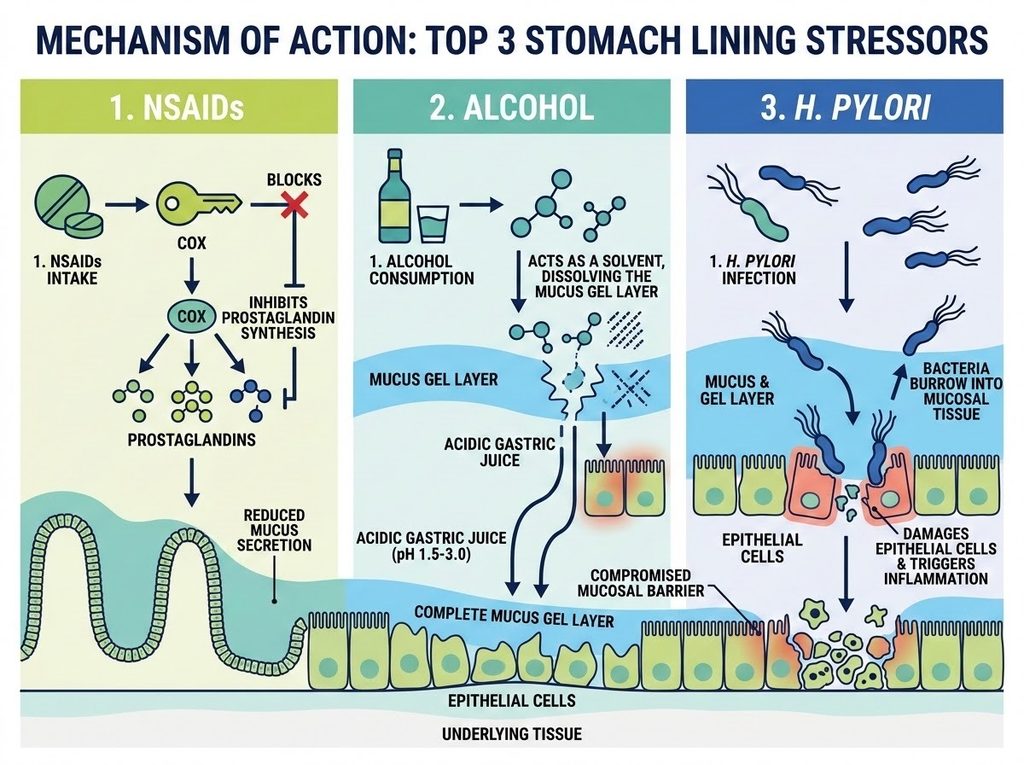
Key Takeaway: Damaging factors like NSAIDs, alcohol, H. pylori, stress, and long-term acid suppression dismantle your mucosal defenses from multiple angles (3).
5. How to Heal It: Remove the Irritant, Then Coat and Repair
Healing the stomach lining naturally follows a systematic, three-step approach: remove the irritant, coat the tissue, then repair the cellular layer. Eliminating primary irritants such as NSAIDs and alcohol, and addressing bacterial factors like H. pylori, provides the necessary foundation for mucosal recovery (4).
Step 1: H. pylori Support
Addressing bacterial imbalances is important for long-term mucosal recovery (3). Targeted probiotic strains, such as Lactobacillus reuteri, bind to H. pylori to support mucosal protection and barrier integrity (4). (See our detailed guide on H. pylori in the 7 Core Strategies article for full protocols.)
Step 2: Soothing Botanicals (Demulcents)
With irritants removed, the next step is protecting raw tissue. Demulcent botanicals form a protective coating over stomach tissue, supporting the continuous mucosal barrier throughout the GI tract (5). Targeted botanical formulas containing mastic gum and DGL soothe and protect irritated tissue while mucosal repair occurs (4):
- Deglycyrrhizinated Licorice (DGL): Helps your stomach produce more protective mucus without raising your blood pressure like regular licorice can.
- Mastic Gum: A natural plant resin that coats the stomach wall while helping keep H. pylori bacteria in check.
- Aloe Vera, Slippery Elm, & Marshmallow Root: These mucilaginous plant extracts mix with gastric fluids to create a soothing barrier over raw tissue, helping reduce discomfort.
Step 3: Zinc Carnosine
Once the tissue is protected, Zinc Carnosine supports the final repair phase. It is a unique chelated compound of L-carnosine and zinc designed specifically for gastric tissue repair. Because of its resilient chemical structure, it resists rapid dissociation in stomach acid and breaks down slowly. This slow release maximizes direct mucosal contact time, allowing it to stick directly to eroded spots to accelerate cellular rebuilding and strengthen mucosal protection (4).
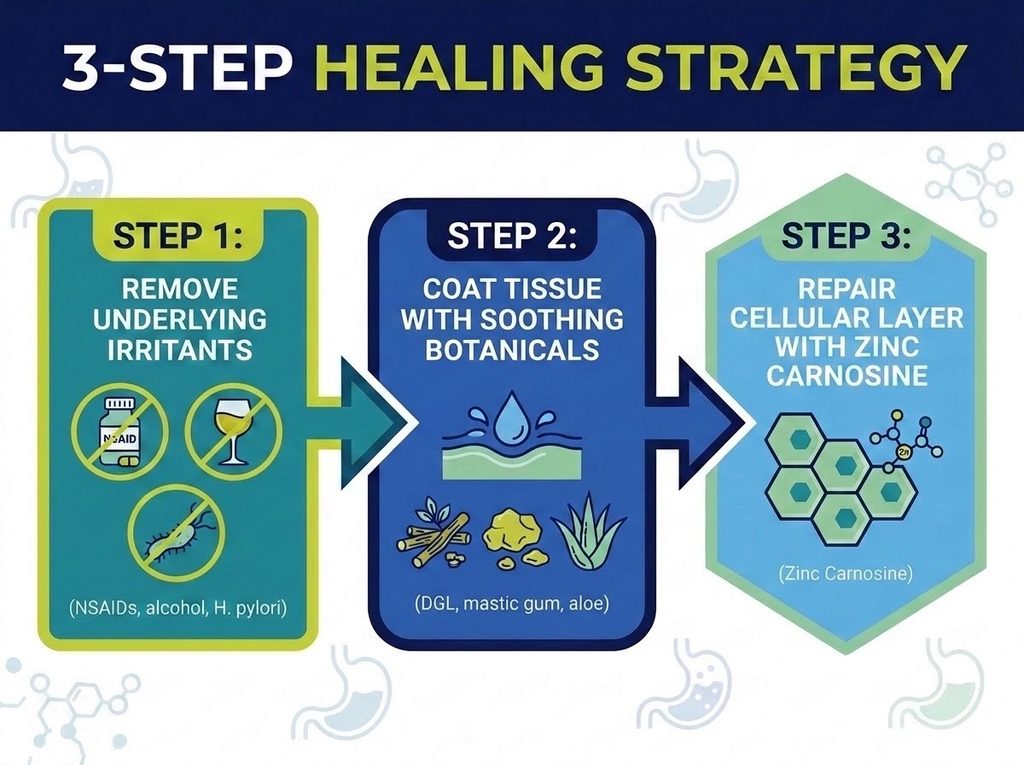
Key Takeaway: Effective healing requires a targeted three-step protocol: eliminate mucosal stressors, coat raw tissue with protective herbs, and rebuild damaged cellular lining with chelated Zinc Carnosine (4).
6. How Long Does It Take to Heal?
Understanding expected timelines helps structure an effective recovery plan:
- Days 1–7 (Quick Relief): Soothing plant extracts (like slippery elm, DGL, and marshmallow root) can bring rapid relief by coating and protecting raw, irritated areas (4).
- Weeks 2–4 (Cellular Regeneration): With irritants removed and tissue protected, new surface cells begin replacing damaged areas as Zinc Carnosine supports the rebuilding process (4).
- Weeks 4–8 (Full Tissue Repair): Rebuilding a worn-down stomach lining usually takes 4 to 8 weeks of consistent care, good nutrition, and avoiding triggers. Even though surface cells renew fast, deep tissue repair takes time (4).
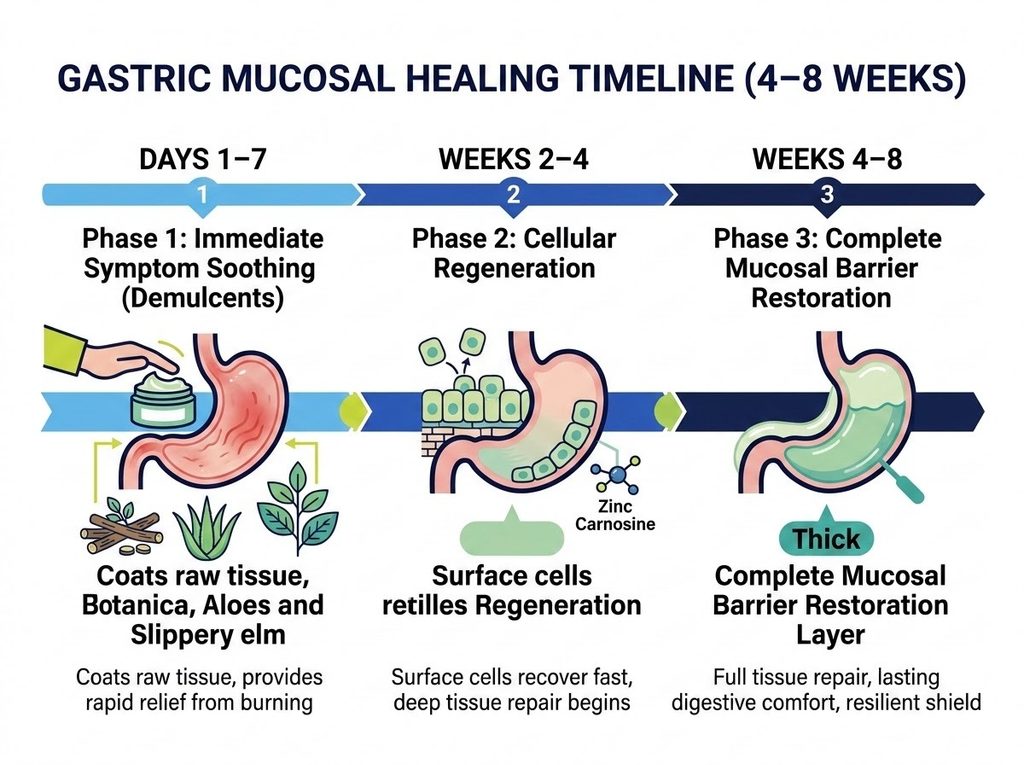
Key Takeaway: Symptom soothing happens in days with protective coating botanicals, but true deep-tissue gastric mucosal restoration takes 4 to 8 weeks of consistent protocol adherence (4).
Conclusion: Restoring Your GI Tract’s Natural Shield
Healing the stomach lining involves restoring the continuous mucosal defense system that protects the entire GI tract (5). By removing primary irritants like NSAIDs or alcohol, managing bacterial factors like H. pylori, and providing targeted protective coating and cellular support, the gastric mucosa can regenerate. Supporting beneficial microbes like Akkermansia and supplying key nutrients such as L-glutamine and immunoglobulins further helps restore digestive health across the whole gut (4).
Remember that real tissue restoration takes time. While soothing botanicals can offer comfort within days, full cellular regeneration typically requires 4 to 8 weeks of consistent care, smart dietary choices, and stress management. Patience and adherence to your protocol are key to building lasting gut resilience (4).
Review the targeted clinical formulations below, organized to support each phase of the recovery timeline.
Recommended Clinical Formulations
The following clinical formulas support mucosal integrity and tissue repair:
- PyloGuard: Uses a targeted L. reuteri strain designed to bind to H. pylori in the stomach. Shop PyloGuard from Microbiome Labs.
- Mastic Gum & DGL: Soothing herbal blends designed to coat the stomach wall and provide rapid comfort. I like the combination formula DGL by Ortho Molecular Products.
- Zinc Carnosine: Helps protect the stomach lining and supports natural cell repair. I like Zinc Carnosine from Integrative Therapeutics.
- MegaMucosa & MegaIgG2000: Complete mucosal support with L-glutamine, protective immunoglobulins, and soothing herbal extracts. I use Microbiome Labs’ products: Shop MegaMucosa | Shop MegaIgG2000