How Postbiotics Are Rewriting the Rules of Brain and Body Health
A quiet revolution is reshaping our understanding of the gut.
For years, the wellness mantra has been to ‘seed and feed’ the gut with probiotics and prebiotics. But a pivotal scientific discovery is shifting the focus: the true power lies in what these microbes produce.
Common strategies include eating fermented foods and taking probiotics and prebiotics. Prebiotics are compounds in our diet that gut microbes break down, helping them flourish while also delivering byproducts that support our health.
These byproducts are known as postbiotics (1).
This raises a pivotal question: What exactly is it about having diverse gut microbes that makes the gut healthy?
It comes back to postbiotics.
Postbiotics are the vast array of metabolic byproducts created by our gut bacteria. At any given time, at least 10% of metabolites in the bloodstream can be traced to gut activity (2).
These postbiotic compounds enhance our ability to detoxify, heal, repair the gut lining, stimulate our immune system, and support the production of vitamins and hormones.
The more we learn about human physiology, the more we seem to be more “microbe” than “human”—microbial genes in the gut dwarf human genes by over 100-fold, providing a vast metabolic toolkit our own genome lacks (3).
The more diverse the microbiome, the more varied the postbiotics it produces. The more postbiotics, the more messengers you have in your body to help you respond to moment-to-moment health needs.
My definition of health is the ability to respond and adapt to an ever-changing environment. Postbiotics allow us to do so efficiently.
This understanding is now fueling a new, targeted approach to wellness: supplementing the gut’s natural production with purified postbiotics and precursor compounds. Research in this field is advancing rapidly, offering more targeted ways to support gut healing and overall health.
Let’s tour your gut’s hidden pharmacy and meet the master molecules that control your mood, sharpen your mind, fuel your cells, and slow the clock of aging.
What Are Postbiotics? The New Paradigm
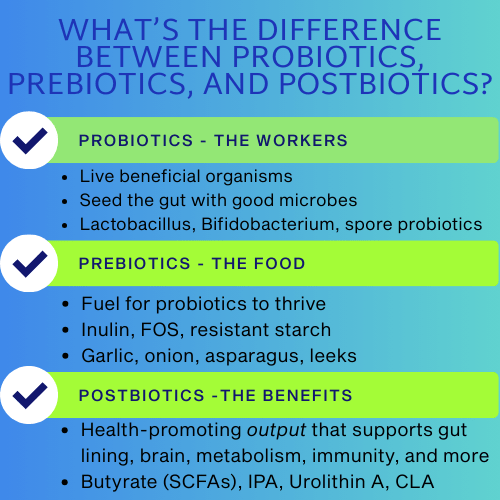
When we take probiotics and prebiotics, the ultimate goal isn’t just to support the bacteria—it’s to harness the powerful compounds they produce.
Think of your gut as an internal pharmacy. Here, the workers are your gut bacteria, the raw materials are the fibers and polyphenols in your diet, and the potent finished products are the postbiotics that deliver wide-ranging health benefits.
This paradigm offers practical advantages. As the final product, postbiotics are often more stable than live probiotics, frequently requiring no refrigeration and offering natural resistance to stomach acid. This also makes them easier to standardize for precise dosing and rigorous research.
It is this stability and precision that allow us to supplement with many of these beneficial compounds directly.
Postbiotics: Your Gut’s Pharmacy
Short-Chain Fatty Acids (SCFAs): The Superfuels: Acetate, Butyrate, and Propionate
Our first stop is the powerhouse of the gut pharmacy: the short-chain fatty acids (SCFAs), comprised of acetate, butyrate, and propionate. These compounds are among the most beneficial end products of a properly functioning gut microbiome.
The success of many probiotic, prebiotic, and postbiotic strategies ultimately comes down to one question: are they increasing SCFA production?
SCFAs are the primary energy source for colon cells, exhibit anti-inflammatory properties, and help regulate gene expression by turning proteins on or off. For instance, butyrate does this partly by inhibiting histone deacetylases (HDACs), key regulators of gene expression (4).
Through these mechanisms, SCFAs play a preventative role in nearly all chronic diseases and are fundamental to healthy aging.
How to Increase SCFAs
SCFAs are produced by a diverse community of gut microbes, but only when they are provided with sufficient amounts of the right raw material from the diet.
When in healthy balance, the system dynamically supports itself in a virtuous cycle. Probiotics and fiber support SCFA production. SCFAs support beneficial gut bacteria and the gut lining while also discouraging the growth of unwanted bacteria.
While many strains contribute, research particularly highlights three keystone players: Bifidobacteria spp., F. prausnitzii, and A. muciniphila.
Because of their foundational role, much of my clinical strategy focuses on supporting SCFA production. This involves a multi-targeted approach that often combines spore probiotics, prebiotics, gut lining support, and direct supplementation.
A foundational strategy I use is a synergistic protocol that combines a spore-based probiotic (for guaranteed gastric survivability and colonization), a specific prebiotic blend (to fuel SCFA-producing bacteria), and gut-lining support nutrients (to give beneficial bacteria a healthy home).
An example of this multi-targeted approach is Microbiome Labs’ Total Gut Restoration program. This research-supported approach combines Megasporebiotic, MegaPre, and Megamucosa.
For more targeted or adjunctive support, I also use direct supplementation with TrubifidoPRO by US Enzymes, Akkermansia muciniphila by Pendulum, and Sunbutyrate – a supplemental source of butyrate created and sold by Pure Encapsulations that is engineered to survive digestion.
B Vitamins & Vitamin K – The Essential Cofactors:
The gut not only produces SCFA fuel used throughout the body, but also serves as a workshop for the production of B Vitamins and Vitamin K.
These vitamins act as essential cofactors—the indispensable assistants that enable countless enzymatic reactions throughout the body.
B vitamins are commonly used up in energy production and can be depleted more quickly under high stress and exposure to toxins (5).
Vitamin K activates several K-dependent proteins, the most well-known of which (matrix Gla protein and calcitonin) shuttle calcium out of the arteries and deposit it into bone (6).
Together, these compounds are non-negotiable for energy production, DNA synthesis, and bone/blood health.
Given how easily B vitamins are depleted under stress and toxin exposure, and the common deficiency of Vitamin K, targeted supplementation is a key part of my strategy.
Therefore, my strategy uses a bioactive B-complex formulation to ensure optimal absorption and efficacy, such as Opti-Absorb B Complex by Doctor Alex Supplements.
For Vitamin K, it works in synergy with other vitamins, which is why I most commonly recommend Vitamin ADK Complete by Doctor Alex Supplements. When dosing Vitamin A is a concern, I opt for Microbiome Labs’ MegaQuin D3.
Postbiotic Mood and Mind Molecules:
Now, our next stop on the tour examines how the gut helps produce the neurotransmitters that shape your mood and mind.
This is where the gut-brain connection becomes evident. A growing body of research shows that our gut microbes are active participants in creating and modulating the very chemical messengers that shape our mood, stress response, and cognitive function.
For example, certain gut bacteria are the primary producers of GABA—your nervous system’s main “brakes,” essential for feeling calm and balanced (7; 8; 9)—and the precursors to serotonin (10).
In fact, an estimated 90% of the body’s serotonin is produced by the gut, making this postbiotic pathway fundamental to mood and well-being (11). Beyond mood, this serotonin also plays a crucial role in regulating digestion and gut motility (12).
Another profound example comes from a group of metabolites called indoles, which gut bacteria create from the dietary amino acid tryptophan.
The standout here is Indole-3-propionic acid (IPA). This compound is a potent activator of key signaling pathways for the gut barrier and systemic inflammation.
Notably, IPA has a unique passport: it crosses the blood-brain barrier. Once in the brain, it acts as a neuroprotective antioxidant, helping support against oxidative stress linked to cognitive decline* (13).
Research has linked higher IPA levels to markers of brain protection and metabolic health (14; 15).
Supporting IPA Production
Since the specific Clostridia that produce IPA aren’t available as probiotics, the strategy is to cultivate the environment with a high-fiber, polyphenol-rich diet and adequate tryptophan—from dietary protein or targeted supplements like L-tryptophan by Metabolic Maintenance—while protecting the gut from stress, alcohol, and antibiotics.
Beyond shaping our mood, the gut microbiome also produces specialized compounds for cellular maintenance and longevity. Here, the focus shifts from communication to renewal.
The Specialized Operators: Targeted Support for Longevity and Defense
Now, let’s visit the department responsible for advanced maintenance and longevity. Here, the gut pharmacy doesn’t just produce fuel and basic parts—it manufactures precision tools for cellular renewal and system-wide defense.
These specialized operators help your cells stay clean, efficient, and resilient.
The Cellular Rejuvenation Crew
First, we have the cleanup crew. These postbiotics activate your body’s own recycling programs, which are essential for clearing cellular debris that accumulates with age and stress.
Autophagy is the process by which our bodies clean up damaged cells and their components. When these damaged, “zombie cells” persist in the body, they remain inactive and, worse, cause oxidative stress and damage.
The 2016 Nobel Prize in Physiology or Medicine was awarded to the researcher who detailed the mechanisms of autophagy. Since then, research on how to promote autophagy has ballooned.
While more substances are likely to be discovered, urolithin A and spermidine are the highlights of current research.
Urolithin A:
Urolithin A is a compound produced when the gut interacts with compounds from pomegranate and some berries.
Pomegranates are high in ellagitannins.
Gut bacteria transform these extracts into Urolithin A.
It specifically triggers a subtype of autophagy called mitophagy—the process of clearing out old, dysfunctional mitochondria to make way for healthy ones (16).
In short, it renews your power plants in every single cell.
This is fundamental for sustaining energy and vitality. Mitochondrial health is one of the strongest predictors of longevity, and maintaining and renewing these cellular “batteries” is essential for energy and healing.
Urolithin A is one of the most promising postbiotics to emerge from this field.
Given its promising role in mitophagy, I use a liposomal urolithin A supplement (e.g., Codeage) for enhanced delivery and often pair it with the pomegranate extracts found in Phytoflora by Doctor Alex Supplements.
Spermidine:
Spermidine is a compound found in foods such as mushrooms and nuts and produced by gut bacteria. Fermented foods such as sauerkraut and aged cheeses also contain natural levels of spermidine.
It is a master regulator of autophagy, the cell’s comprehensive ‘recycling day’ (17).
Promoting this deep cellular cleanup supports neuroprotection, metabolic health, and longevity*. Otherwise, these cells are inactive, and while they “stick around,” they actively cause oxidative stress.
While spermidine supplements are available, I typically recommend a dietary approach, as foods like sauerkraut, miso, mushrooms, and aged cheeses naturally support gut-derived and dietary spermidine levels.
In addition to tidying up the cellular environment, postbiotics also help support the body against stress.
System Defense Support
Alongside these renewal signals, the gut also produces compounds that support the body against daily wear and tear*.
Naringenin:
This brings us to naringenin (from the precursor naringin).
A potent flavonoid found in citrus fruits such as grapefruit, pomelos, lemons, and oranges (especially in the peels), it’s broken down by your microbes into powerful postbiotics.
Naringenin acts as a dual-purpose defender, serving as an antioxidant that supports against oxidative stress, systemic inflammation, and metabolic imbalance* (18).
I also use Phytoflora Microbiome Support by Doctor Alex Supplements. It contains MicrobiomeX, a standardized preparation of citrus bioflavonoids, including naringenin, in addition to the pomegranate extract compounds mentioned earlier.
Together, these specialized operators—Urolithin A, Spermidine, and Naringenin—demonstrate how a well-run gut pharmacy goes beyond basic function to maintain your long-term resilience and vitality*.
It is exciting that many more specialized operators remain to be discovered.
Signaling Lipids (The Metabolic Messengers)
Next, we arrive at a key control room in your gut pharmacy. This department doesn’t make fuel—it makes messengers. These are powerful, hormone-like compounds that send signals to your liver, immune system, and metabolism.
Conjugated linoleic acid and secondary bile acids are fats that gut bacteria can produce that also have signaling mechanisms in the body.
Conjugated Linoleic Acid (CLA): The Fat Signal
A key messenger is conjugated linoleic acid (CLA).
Specific gut microbes, including particular Bifidobacterium species, can produce CLA as they metabolize dietary fats.
This compound acts as a distinct cellular signal that supports healthy metabolic function and helps maintain a balanced inflammatory state (19). By doing so, CLA exemplifies how gut-derived postbiotics support overall systemic wellness.
My strategy for supporting CLA pathways is threefold: nurture Bifidobacterium levels with TrubifidoPRO by US Enzymes, provide direct supplementation with a purified CLA, such as Tonalin CLA by Davinci Labs, and prioritize more CLA in your diet.
CLA is responsible for the deeper orange yolks in pasture-raised eggs. And butter made from grass-fed cows is also richer in color. These animals’ diets are healthier; therefore, their products have a better fat profile for human health, too.
Secondary Bile Acids: The Liver’s Gut Assistants
This is one of the gut’s most important jobs. Your liver makes bile acids to help digest fats. Then, your gut bacteria step in to remodel these acids into a new, more powerful form called secondary bile acids.
These transformed compounds are like master switches. They fit into specific “docks” (receptors), sending signals that:
- Help maintain cholesterol and blood sugar levels*.
- Influence how you burn energy.
- Support balanced immune responses* (20).
A rich and varied gut microbiome can produce a better mix of these helpful signals. This allows your body to make fine, precise adjustments to keep your body functions running smoothly.
One of my favorite examples is tauroursodeoxycholic acid (TUDCA). This secondary bile acid is produced from ursodeoxycholic acid (UDCA) when acted upon by gut bacteria. You can take TUDCA as a supplement to support digestion, fatty liver, and antioxidant and signaling mechanisms that primary bile acids cannot provide on their own (21; 22).
I take TUDCA by BodyBio.
Microbial Balance – Maintaining a Healthy Gut Ecosystem
Healthy gut bacteria support microbial balance in several ways.
pH Support
Many bacteria produce organic acids, such as lactic acid, that help create an environment that wards off unwanted organisms (23). For instance, the vagina is highly colonized by Lactobacilli, which produce higher concentrations of acid, helping keep the environment safe from unwanted pathogens. Some Lactobacilli produce hydrogen peroxide, a direct antimicrobial compound.
Specific Peptides and Enzymes
Bacteria can produce peptides, such as bacteriocins, that support the balance of the normal flora* (24). Bacteria also produce enzymes that can break down or interfere with the normal life cycle of unwanted microbes.
My favorite example is the spore probiotics, particularly Bacillus subtilis HU58.
While other spore probiotics have some antimicrobial activity, the HU58 strain is the most potent. It produces at least 12 different antibiotic compounds that help support microbial balance in the gut*.
I use HU58 by Microbiome Labs, often in addition to Megasporebiotic (which contains HU58 as one of its strains).
Immune System Signals
In addition to producing direct antimicrobial compounds, bacteria produce compounds that help train the immune system, both directly and indirectly. SCFAs, such as butyrate, support the gut lining and immune cells*.
During the normal life cycle of bacteria, some cells die, and fragments of their cell walls enter the bloodstream. This can be negative, as lipopolysaccharides (LPS) are considered endotoxins. But other types of fragments can also be beneficial: some compounds help train the immune system, educating and modulating immune responses throughout the body.
Three notable strains, Lactobacillus rhamnosus GG, Bifidobacterium lactis BB-12, and Saccharomyces cerevisiae (a beneficial yeast strain), encompass many of the mechanisms discussed in this article. They support gut lining integrity, peptide production, normal immune signaling, and SCFA production. Several studies detail these mechanisms (25; 26; 27).
Microbiome Labs recently formulated a product that combines all three powerful strains with other immune-support nutrients*. It is called Epic Defense and can support daily and seasonal wellness*.
In addition to postbiotic benefits, beneficial gut bacteria crowd out unwanted inhabitants by taking up space. When healthy and nurtured, they not only produce compounds that directly ward off invaders but also use nutrients and fuel that overgrowth of unwanted bacteria would otherwise compromise.
Stress Support*
Under conditions of high cortisol, the body’s primary stress hormone, immune function is suppressed. As a specific probiotic strain, Bifidobacterium longum 1714 contains cell membrane components that help modulate immune and inflammatory responses*and support normal cortisol levels* (28).
In a 4-week human trial, 1714™ reduced perceived stress, improved memory performance, reduced mental fatigue, positively supported brainwave activity, and improved the ability to handle occasional stress* (29).
Two products from Microbiome Labs leverage this unique strain: Zenbiome Cope for daily support and Zenbiome Sleep for nighttime support.
The Ripple Effect: How Postbiotics Orchestrate Whole-Body Health
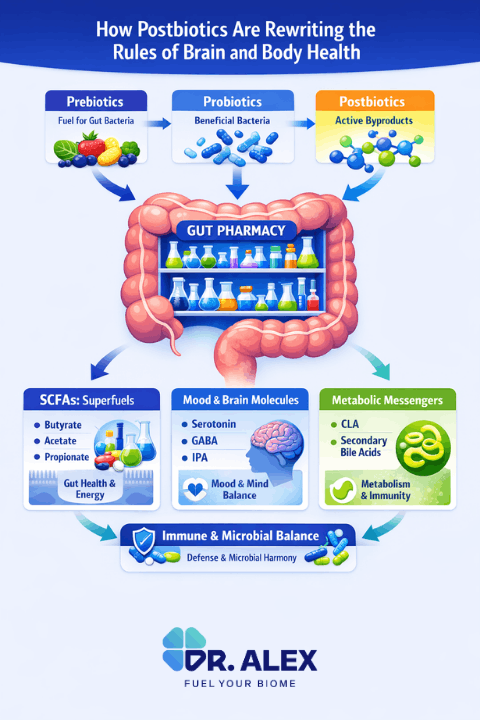
This entire network depends on one thing: a strong, diverse microbiome. Think of it as the essential workforce that makes everything else possible.
Here’s how it plays out across your key systems:
- Metabolic power and foundational gut health are fueled by core SCFA signals, with vital support from cofactors such as B vitamins and Vitamin K.
- A sharp mind and balanced mood are supported by your gut’s production of neurotransmitters (like GABA and serotonin) and protective brain molecules like IPA.
- Longevity and cellular renewal are driven by specialized operators that promote cellular cleanup, including Urolithin A for mitochondrial renewal and spermidine for general autophagy.
- System-wide defense and metabolic signaling are regulated by potent lipid messengers such as CLA and secondary bile acids, which help fine-tune metabolism, immunity, and energy use.
- A resilient gut ecosystem is actively maintained, where beneficial bacteria produce compounds that support microbial balance, crowd out unwanted inhabitants, and help train your immune system.
From the foundational SCFAs to the specialized Urolithin A, each of these master molecules has a unique, vital job. They represent just the first chapters of a much larger story, with many more postbiotic compounds awaiting discovery.
Ultimately, health hinges less on the microbes alone and more on the beneficial postbiotics they generate.
We can strategically influence this production through diet, lifestyle, and targeted supplementation, thereby supporting our body’s natural pathways for resilience, cognitive function, and longevity.
Related Articles
- Short-Chain Fatty Acids – Benefits for Gut Health, Immunity, and Beyond
- Psychobiotics – Mood Probiotics for Anxiety, Depression, and Stress
- New Insights on the Anti-Aging Benefits of Vitamin K2
- Your Microbiome Explained – How to Improve Your Gut Health
- 7 Core Strategies to Heal the Gut Lining and Manage Leaky Gut