
What does dark chocolate have to do with apples, red wine, green tea, onions, and cranberries?
They share powerful chemicals called flavonoids.
Once you take a peek at dark chocolate’s health benefits, you will be pleased to know not all nutrition news has to be disheartening for your palate.
What are Chocolate Flavonoids?
Flavonoids are a subset of antioxidants and polyphenols that may be associated with health benefits, including cancer prevention, cardiovascular disease prevention, digestive health, and immune balance.
Flavonoids may also have anti-inflammatory, anti-cancer, anti-hypertensive, and anti-aging properties (1; 2; 3).
Dark Chocolate Benefits
A Piece of Chocolate a Day Keeps the Doctor Away?
Up to 10% of the dry weight of cocoa beans and dark chocolate is made up of polyphenol compounds (4).
In addition to flavonoids, cocoa beans contain other antioxidants, such as catechins, epicatechins, and proanthocyanidins, that may also contribute to some of the health benefits.
Flavanols can contribute to the bitter taste in pure chocolate. But the more processed and palatable a chocolate product becomes, the more it may lose health value.
Because of the diversity of cocoa beans and cocoa-derived products, specific health claims about consumption are unlikely to be made any time soon (5).
Meanwhile, the research keeps piling up…
In 2010, the New York Times reported that moderate intake of chocolate throughout the week or month was associated with a lower rate of hospitalizations and death from heart failure.
But before you run and stock up on your 85% cocoa bars at the grocery store, the study emphasized moderation.
The study noted that the protective effect was not observed for individuals consuming one or more servings of chocolate per day (6).
So for now, the research favors small, moderate servings over large amounts.
What else is the research saying…?
Is Dark Chocolate Good for Your Prostate? What the Research Shows
Dark chocolate may support prostate health, but the evidence is early. Cocoa flavanols slowed prostate cancer cell growth in lab studies and lowered tumor rates in animals. No human trials have tested dark chocolate for an enlarged prostate (BPH) yet. One study using an extract in mice showed positive promise (https://pubmed.ncbi.nlm.nih.gov/18158832/).
A 2006 study published in the European Journal of Cancer Prevention demonstrated that cocoa extracts may offer an anti-proliferative effect on the growth of prostate cancer cells (7). A later study in the same journal also supported a reduction in prostate tumor incidence in rats fed cocoa powder (8).
Regular milk chocolate is packed with sugar and has less actual cocoa. This means you miss out on the antioxidant benefits, and the sugar can even trigger inflammation. If you enjoy it, about 1 ounce of 70% or higher cacao is a reasonable amount.
Is Dark Chocolate Good for an Enlarged Prostate?
There isn’t direct research on dark chocolate and BPH. What we do know is that flavanols are anti-inflammatory and support blood vessel function, and chronic inflammation is part of the BPH picture. That makes dark chocolate a reasonable addition to a prostate-friendly diet, not a treatment. If you have urinary symptoms, get evaluated first.
How much dark chocolate should I eat?
Keeping dark chocolate intake to 1oz per day is generally recommended to maximize the polyphenol intake without also getting too much sugar or potential irritation from the caffeine and theobromine that are also in chocolate. This comes out to 1-3 small squares per day.
A high 70%-85% dark chocolate bar will also taste more bitter, so the 1-3 small squares are satisfying; beyond that, the bitterness may leave a tacky feeling in your mouth, similar to what you might feel after drinking a high-tannin wine.
If prostate health is your goal, the same 1 ounce a day applies. More chocolate adds sugar without adding benefit. Choose brands tested for lead and cadmium (see my picks below), since heavy metals are the last thing you want when you are eating chocolate for your health.
What about cocoa and cacao?
Both cocoa and cacao come from the same plant. Cocoa is made at higher temperatures, giving it a silkier texture and sweeter flavor, whereas cacao is made at lower temperatures, making it more bitter yet more nutrient-dense. As you might expect, minimal processing makes cacao healthier for its functional health qualities.
Chocolate and Cancer:
Some evidence links chocolate consumption to anti-cancer properties.
Chocolate may affect cancer growth in a number of interesting ways:
- Suppresses pro-inflammatory cell messengers and cancer cell transformation (9; 10).
- It also shows cancer-preventive effects due to its antioxidant potential (11).
- Cocoa flavanols and procyanidins can be transported inside the cell & may modulate cancer-related signaling. Their effect may be selective on human cancer cells (12; 13).
Cocoa and Gut Health:
- Dark chocolate intake may help promote healthy gut bacteria & reduce systemic inflammation (14).
- Flavonoids found in other foods have also demonstrated protective effects on gastrointestinal integrity by influencing gene expression (15).
Inflammation & Neurodegeneration:
- Cocoa consumption positively influences inflammatory pathways (16).
- An inverse correlation exists between flavonoid-containing foods and neurodegenerative diseases such as Alzheimer’s or Parkinson’s (17).
- Flavonoids can work like antidepressants and have protective effects on inflammatory processes related to nerve injury (18).
Chocolate and Heart disease:
The strongest evidence for dark chocolate’s positive effects comes from its chemical components’ influence on the cardiovascular system (19).
In his article “More Good News About Chocolate,” world nutrition expert Dr. Andrew Weil asserts that chocolate can help lower blood pressure, improve blood vessel function, and even lower insulin levels. But the proposed benefits do not stop there…
- As chocolate consumption increases, coronary heart disease in the United States has been shown to decrease (20).
- Although high in fat content, the majority of the fat is composed of stearic acid, which does not negatively affect cholesterol levels (21), as has also been reported by Dr. Andrew Weil.
- Dark chocolate may reduce LDL and total cholesterol levels when consumed over a period of two to twelve weeks (22).
- Because cocoa may reduce cardiovascular risk, it may indirectly reduce all-cause mortality and play a “pivotal role in human health” (23).
- Other reviews support the role of cocoa products on heart disease factors such as blood pressure, but caution against treatment recommendations until further details are investigated (24).
Chocolate: Food as Medicine?
Numerous research reviews support that dark chocolate intake may positively influence oxidative stress, inflammation, vessel function, immunity, detoxification, and nitric oxide production, and may exert protective effects on blood pressure, insulin resistance, lipid profile, and platelet activation (25; 26; 27; 28; 29; 30; 31; 32; 33; 34; 35; 36; 37; 38; 39; 40)
Although the research looks promising, health benefits are more consistently associated with dark chocolate, as milk chocolate may contain proteins that inhibit flavonoid absorption (41).
Additionally, Consumer Reports recently released a guide detailing high levels of lead and cadmium in some products that may surprise you.
My favorite chocolate that is listed as a “safer chocolate“ by Consumer Reports is Taza Chocolate.
The higher the cacao content, the more flavonoids and polyphenols it has, and the more bitter the chocolate. The bitterness can help, since you’re more likely to stick to a smaller 1 oz daily serving (1-3 squares per day).
The dark chocolate varieties are made on separate equipment and remain completely dairy-free, soy-free, and 100% organic.
Best Dark Chocolate
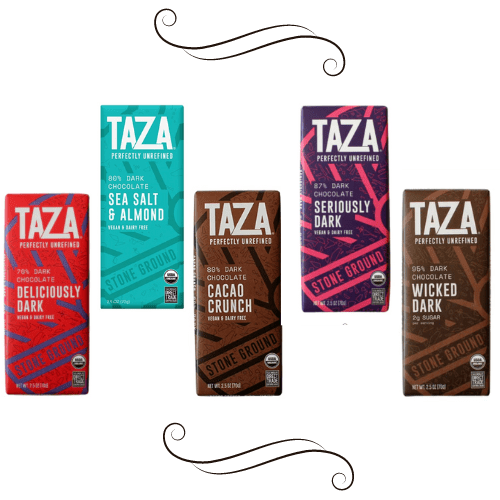
For general wellness support, I believe that eating about 1 ounce of high-cocoa dark chocolate a day can be an enjoyable way to add variety to your food plan and take advantage of its potent health benefits.
Related Articles:
- Can Elevated LDLs Be a Protective Mechanism in Response to Inflammation and Leaky Gut?
- Arterosil Benefits – Support for Cardiovascular Health
- Is Saturated Fat Healthy?
- Why Does Heart Disease Run in My Family?
- Do You Have Hidden Heart Disease?
- Support HDL Cholesterol Levels Naturally and Keep a Healthy Heart