
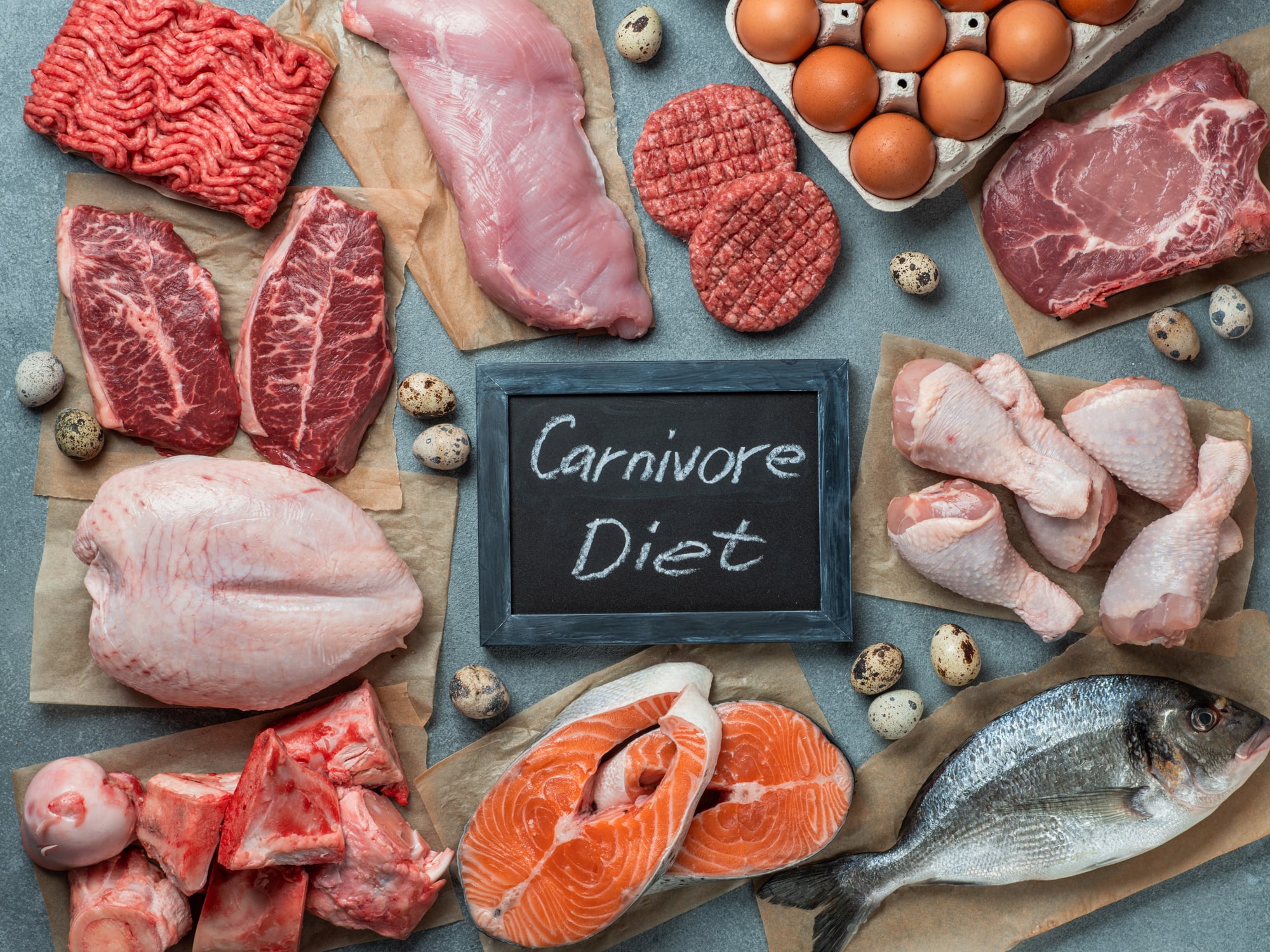
A Powerful Short-Term Reset, But a Risky Long-Term Road
The Carnivore Diet is among the most polarizing topics in wellness today, particularly with respect to the human microbiome.
As a functional medicine practitioner focused on the microbiome, I see it not as a simple “good” or “bad,” but as a tool with a very specific use case.
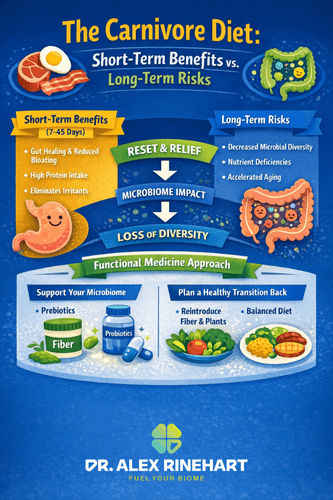
My clinical perspective? The Carnivore Diet can be a remarkably effective short-term elimination and reset protocol for 7 to 45 days, with many experiencing the core benefits within the first 30 days. However, it becomes a risky long-term strategy for most people seeking lifelong health.
Let us discuss why it works so well initially.
Carnivore Diet Benefits
By removing all plant-based foods, you’re eliminating nearly every dietary antigen and fermentable carbohydrate at once.
For someone with significant gut permeability (“leaky gut”) or SIBO-like symptoms, this can provide profound relief. The constant bloating and discomfort stop because there’s little left for problematic microbes to ferment and produce gases.
Furthermore, many individuals are chronically under-consuming high-quality protein. The Carnivore Diet corrects this deficiency overnight, providing the essential building blocks for repair, while often emphasizing stable, saturated fats that are less prone to oxidation.
However, this short-term benefit comes with a long-term cost for your inner ecosystem.
Carnivore Diet Risks – The Microbiome and Longevity
The core goal of a resilient gut is diversity—a wide range of microbial species that produce a vast array of postbiotic benefits (such as butyrate) that regulate the immune system, mood, and metabolism.
A diet consisting solely of animal products dramatically narrows the nutritional input for these microbes. Over the weeks of a strictly carnivore approach, you can experience a significant loss of microbial diversity, essentially “starving out” the beneficial bacteria that thrive on plant fibers.
This sets up a frustrating cycle.
While initial shifts in the gut microbiome can begin within days, by the 45-day mark, these changes become more rooted. If you remain on the diet beyond this 45-day window, you risk conditioning your system to be less tolerant of a broader range of prebiotic-containing foods.
When you eventually reintroduce other foods—which you must for long-term diversity—your gut is less equipped to handle them. You may react more strongly than before and interpret this reaction as a “food intolerance,” when it is often a sign your microbiome lacks the necessary diversity and populations to metabolize those foods optimally.
With the carnivore diet, you’ve traded one set of symptoms for a more fragile system.
There’s also the longevity question. While building muscle mass is crucial, very high-protein diets are rich in the amino acid methionine, which can overactivate pathways such as mTOR, which are associated with accelerated aging. It’s a nuanced balance.
So, what’s the functional medicine path forward?
If you use the Carnivore Diet as a short-term reset, you must be proactive about protecting and inoculating your microbiome. I advise clients to include specific, well-researched supplements:
- Prebiotics: A fiber such as partially hydrolyzed guar gum (PHGG/Sunfiber) is gentle, well-tolerated, even on a zero-carbohydrate diet, and supports keystone bacteria. I use Sunfiber by US Enzymes.
A broader-spectrum prebiotic, such as MegaPre by Microbiome Labs, can also support critical strains without promoting unwanted strains. - Probiotics: Consider spore-based probiotics (Megasporebiotic by Microbiome Labs) that survive digestion to seed the gut, alongside a high-potency Bifidobacteria formula (TrubifidoPRO by US Enzymes) to maintain a crucial population often diminished on low-fiber diets.
In essence, the Carnivore Diet can be a powerful short-term therapeutic tool, but it is not a complete, lifelong Fuel Your Biome strategy.
True wellness is about building resilience and diversity, not just elimination. Use it wisely, support your microbiome diligently, and always plan the transition back to a diverse, whole-foods diet.
Related Articles: