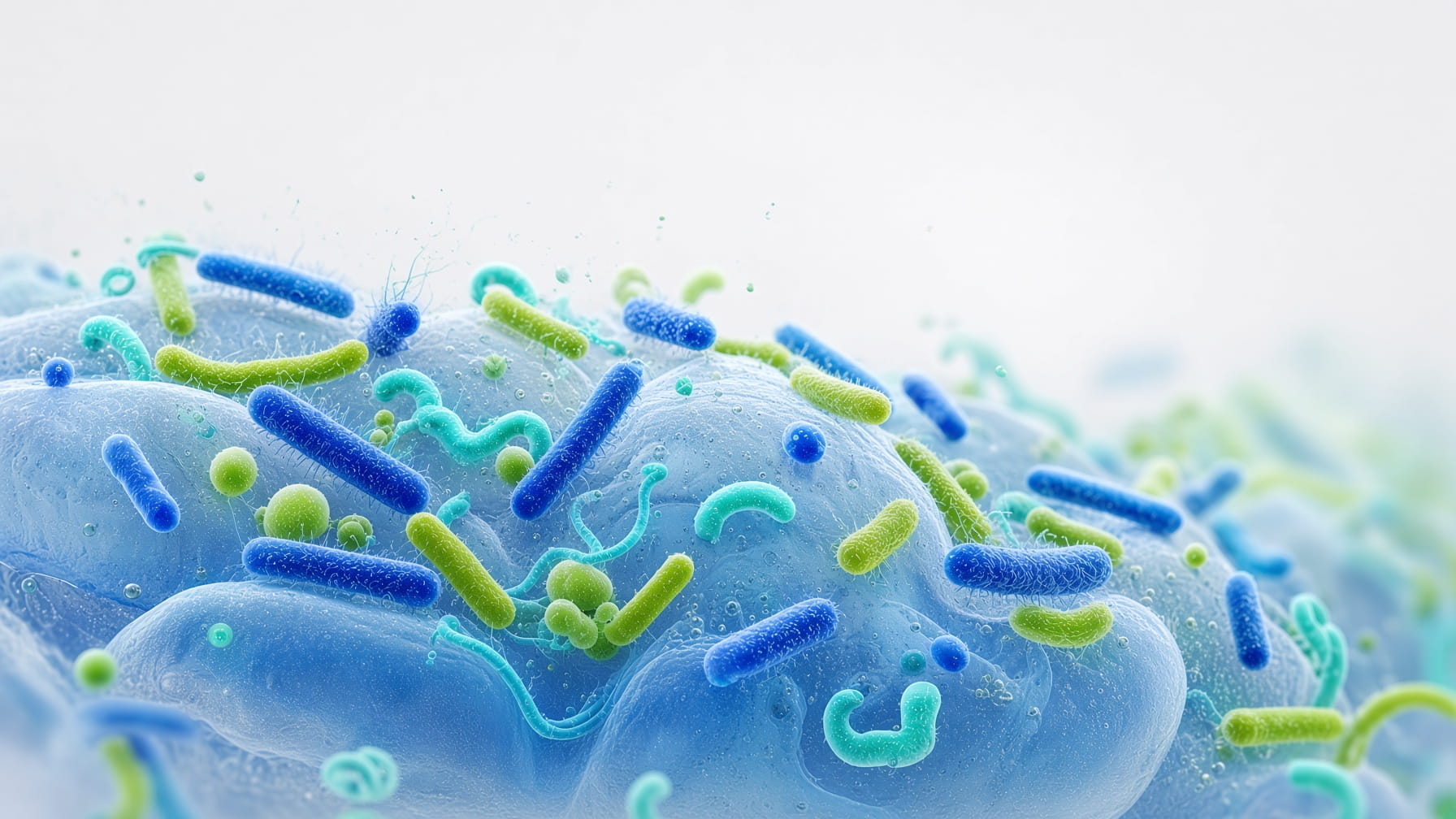

Short-chain fatty acids (SCFA’s) are byproducts of healthy gut microbes after interacting with dietary fiber.
In return, SCFA’s support immunity, mucosal health, leaky gut, inflammation, and probiotic benefits (1).
The main SCFA’s produced in the gut are butyrate, propionate, and acetate.
They are predominantly produced in the colon. SCFA’s can be found in other areas of the intestines and can circulate in the bloodstream to help support the liver, lipid balance, cell growth, energy production, and more.
Butyrate is the most frequently studied of the SCFAs and is also a primary fuel source for colon / large intestine cells.
SCFA’s can also pass the blood-brain barrier and affect the brain.
One potential benefit of SCFAs for the brain is their role in appetite suppression (2).
More exciting, SCFA’s can train immune cells in the gut to fight autoimmunity in the brain (3). While brain inflammation tends to capture the attention, the immune training is not specific to the brain, and extends to immune responses across the entire body (4; 5; 6).
Immune tolerance is why someone can be more susceptible to food or environmental allergies than others. Loss of immune tolerance is central to all autoimmunity and explains why immune cells begin to treat healthy cells as foreign or pathogenic (7; 8; 9).
SCFAs, along with probiotics, play crucial roles in not only keeping the immune system strong, but also keeping immune cells smartly trained to minimize collateral damage from their efforts to protect you.
When you eat certain food antigens or are exposed to mold, pollen, or man-made pollutants in the air or water, the immune system can see these as problems and initiate an immune response.
A poorly trained immune cell will inevitably engage in friendly fire on healthy cells.
As your gut flora changes, the amount and ratio of SCFAs will also change.
Healthy production of SCFAs may help reduce the risk of gastrointestinal disorders, food allergy, inflammation, oxidative stress, immune disorders, cancer-promoting processes, and cardiovascular disease (10; 11; 12; 13; 14; 15; 16).
Functionally, SCFAs may also support blood flow to the colon, mineral absorption, healthy intestinal pH, normal bile and cholesterol metabolism, and the motility of material passing through (17; 18).
By promoting healthy intestinal pH, SCFAs provide antimicrobial and probiotic benefits, as pH can dictate what types of bacteria are able to grow (19).
Leaky gut is when there are holes or gaps in the intestinal barrier, allowing pathogens, toxins, or food proteins to pass into the blood. This triggers immune activation and is a key feature of how certain foods can trigger immune flare-ups in autoimmune-sensitive individuals.
SCFAs help to reduce leaky gut directly by helping to improve the assembly of tight junctions and their reassembly following damage (20; 21; 22).
Leakiness of the gut is also largely improved as a secondary benefit alongside the other benefits discussed previously.
When gut health is disturbed, we lose the self-sustaining benefits of SCFA production, and the whole system has more difficulty recovering.
It’s clear – the production of SCFAs in the gut is important to re-establish and maintain healthy gut function. The benefits extend far beyond the gut, positively influencing the brain, weight management, energy metabolism, inflammation, immune health, and more.
The Master Assembly Line of the Gut
 The gut is an assembly line with multiple departments.
Within each department of the gut (stomach, small intestine, large intestine, colon) different workers are present that
- Protect the “GI factory” from accidents and damage to its machinery (Gut-Associated Lymphoid Tissue)
- Bind toxins (immunoglobulins like IgG-Boost 2500 Powder or MegaIgG2000)
- Keep the assembly line moving (vagus nerve and motility)
- Ferment food (probiotics) to extract and manufacture useful nutrients and metabolites from the material as it passes through.
The healthier the entire system, the more metabolites you’ll pull from the food you eat, the more efficiently you’ll get rid of wastes – and the less collateral damage that’s experienced along the way.
Your gut is lined with receptors for these various metabolites, and action on these receptors leads to a cascade of anti-inflammatory benefits across the body (23).
SCFA’s are among the most important metabolites produced in the colon at the end of the assembly line – and they work to help the entire “GI factory” work more efficiently long-term (24).
So when SCFA’s are deficient, it becomes very difficult to re-establish a healthy working environment in the gut, and immunity and metabolism can be thrown off-kilter.
At the very least, a deficiency in SCFAs will put much more strain on your needs for probiotic balance, flora diversity, prebiotic and fiber intake, and mucosal support.
How to Boost Short Chain Fatty Acid (SCFA) Levels in the Body
By starving the body of SCFAs like butyrate, you’re starving the body’s ability to regulate intestinal health, immunity, inflammation, and proper cell growth and signaling.
Here are some strategies to boost levels and the production of short-chain fatty acids.
1.) Take SCFA’s Directly
While the goal is to restore gastrointestinal health and microbial diversity, you can directly support butyrate and other SCFA levels through supplementation.
Pure Encapsulations offers Sunbutyrate Tg Liquid to help support butyrate levels. Short Chain Fatty Acid capsules also support butyrate, acetate, and propionate levels.
2.) Supplement with SCFA-producing probiotics
Spore probiotics like SporeBoost IgG and Megasporebiotic help support levels of healthy bacteria in the gut – especially when probiotics are combined with prebiotics.
Akkermansia muciniphila is increasingly regarded as a keystone strain for a healthy gut lining, in part, due to its support for SCFA production.
Bifidobacteria predominate in the large intestine, where the majority of food fermentation occurs. I use TrubifidoPRO to support Bifidobacteria levels. Prebiotics will also support the growth of Bifidobacteria.
Bifidobacteria work synergistically with butyrate-producing bacteria and dietary and supplemental prebiotics to boost butyrate production (25).
3.) Consume or Supplement with Prebiotics that Fuel SCFA-Producing Probiotics
SCFAs are produced when bacteria in the gut act on fiber and polysaccharides in the intestine. Ensuring dietary intake of fiber, plants, and herbs, as well as supplementing with outside fiber (26), will support SCFA production in the body.
I commonly supplement with Megaprebiotic, FloraStart Prebiotic Fiber, Trufiber, and FloraSpectrum Prebiotic Fiber, and introduce them slowly (mostly in that order over weeks/months) as intestinal health improves.
The order of introduction reflects client tolerance and the types of bacteria each fiber type has the potential to promote. Long-term, I take these interchangeably to keep the system guessing and fuel different types of beneficial bacteria.
Fiber is ultimately essential for optimal flora activity – but start low and work up systematically. If one formula is not tolerated even in small amounts, try a different fiber and return to the original later.
Poor tolerance to a formula may mean that inflammation and intestinal dysbiosis or overgrowth remain high. It may also mean that someone took too much too soon.
Long-term, I recommend rotating products like these to continue to promote microbial and metabolite diversity in the gut and keep the system “guessing”.
The more fuel types (diverse fibers and chemicals from food and supplements) you provide the body – the more plentiful and diverse metabolites the assembly line will produce. The more plentiful and diverse metabolites – the more diverse the situations the body can respond to optimally.
“Health” is the body’s ability to respond to an ever-changing environment. Gut-derived metabolites are critical to help the body respond optimally.
Not all probiotics in the gut have been identified, and not all beneficial flora that produce SCFAs can be supplemented orally – the next best thing is to provide fuel for these bacteria in the form of diverse prebiotics and food phytochemicals.
It is best to start slowly and methodically any time you introduce new fibers to the diet – and the same generally goes for high-FODMAP foods and new probiotics.
4.) Eat the Rainbow: Eat colorful fruits and vegetables and provide diverse polyphenols and plant chemicals to support bacterial diversity and metabolite production.
By eating the rainbow, I’m certainly not talking about Skittles. I’m talking about powerful phytochemicals.
SCFA production is also promoted by the intake of polyphenols in the diet, which offer antioxidant, anti-inflammatory, and prebiotic benefits.
Curcumin, bioflavonoids, EGCG from green tea, resveratrol, quercetin, Beta-glucan, and others are well-regarded in the literature for wide-reaching health benefits for the gut, immunity, and beyond.
I have combined many of these in Daily Phyto Balance and PhytoFlora Microbiome Support to support a wide range of bodily needs, including inflammation and SCFA production.
Poor tolerance to polyphenols again may mean that inflammation is too high or that there is a deficiency in the right microbial balance to process the polyphenols appropriately.
Luckily – a key benefit of polyphenols is their anti-inflammatory properties and sometimes you need to experiment to find the right mix for you.
The gut mucosa cannot repair itself while it is inflamed. Polyphenols simultaneously reduce inflammation and allow probiotics, prebiotics, and other benefits of polyphenols to work more effectively.
Megamucosa by Microbiome Labs contains a combination of mucosa-supporting amino acids, bioflavonoids, and immunoglobulins. It was formulated specifically to help support mucosal lining health and inflammation. It has quickly become one of our most popular and clinically supportive products.
PhytoFlora Microbiome Support contains the same licensed bioflavonoid extract as Megamucosa in capsule form, along with Pomonox, a licensed pomegranate extract.
The intestinal mucosa cannot be “inflamed” and “healing” simultaneously, so these strategies work hand in hand.
Likewise, Megaguard by Microbiome Labs contains a novel blend of licorice flavonoids. Flavonoids are a chemical subset of plant polyphenols that work to support stomach inflammation, provide antimicrobial support, promote mucosal health, and spur motility and gastric secretions when combined with ginger and artichoke leaf.
Be mindful of the high fructose content in some fruits, and don’t be afraid to add fresh citrus zest (organic preferred) to home recipes to boost polyphenol content and add a burst of flavor.
The Standard American Diet is full of colorless, packaged, and processed foods that leave out the fiber and rich plant chemicals that are necessary for optimal gut function. Sadly, a majority of dietary fiber in American diets comes from bread and pasta.
Gluten is known to cause leaky gut and inflammation – even in the absence of a true immune reaction. These symptoms are more likely to result in brain fog, sore joints, and other symptoms than in loose or constipated bowels, stomach pain, or intestinal discomfort!
Removing wheat can help soothe this inflammation and patch up holes in the lining, but after removing wheat from your diet, you must add other sources of prebiotic fiber or risk creating other problems for yourself.
I discussed some of the new research and the importance of eating prebiotic fiber while following a gluten-free diet here: New Reasons to Go Gluten-Free for Long-term Gut and Immune Health.
Given the prevalence of wheat in American Diets – as well as the trendiness of gluten-free diets – and the seriousness of replacing the lost prebiotic fiber, I feel that article is one of the most important that I’ve written recently.
If autoimmunity, early aging, and loss of brain function are long-term concerns, I suggest a gluten-free diet – and doing it “correctly”.
5.) Maintain a Virtuous Cycle of Intestinal Health
Gut health is self-perpetuating once the ball is moving in the right direction.
By promoting healthy gut bacteria and reducing gastrointestinal inflammation, you’re also supporting healthy SCFA production in a self-perpetuating cycle. SCFAs help maintain mucosal health and an anti-inflammatory environment that good bacteria depend on to thrive.
Eating a diet that is increasingly diverse in plant fibers and countless plant chemicals is the key to maintaining this beautiful system in the long term. You can discover the exact plant-rich dietary habits and daily routines that preferentially feed SCFA-producing microbes in our guide on How to Improve the Gut Microbiome.
It can take some time to tolerate many foods again, and I’ve explored a more comprehensive approach to healing the gut lining and increasing probiotic and prebiotic diversity.
These strategies will work together and can be personalized to improve SCFA production in the gut.
Related Articles:
- Landmark Study Reveals a Profound Connection Between the Gut Microbiome and Maintaining a Healthy Weight
- The 7 Core Strategies to Health the Gut Lining and Manage Leaky Gut
- The Many Benefits of Bifidobacteria
- Plant Polyphenols – the Next Generation of Prebiotics
- An Avocado a Day to Keep the Doctor Away? Discover the 7 Best Practices to Maintain a Healthy Gut Microbiome
- Support Immunity Naturally with these 10 Foundational Strategies
- Akkermansia Muciniphila: The Ultimate Guide to Benefits, Supplements, and Gut Health